
My Journey From Hell to Well
By all conventional markers, I should have been dead a long time ago. In 1996, at 42, I could barely function because of undiagnosed late-stage type II diabetes caused by a vegetarian diet that almost killed me. Eventually, I identified the problem on my own, figured out what had caused it, and nursed myself back to health by 1999, but at enormous cost.
You may not be as lucky in a similar situation because I had a pharmacy degree, access to professional medical textbooks and references, and no fear of dealing with the problem on my own.
When I got sick, I was running a software development company with over $2 million in annual revenue that I had essentially built single-handedly over the previous nine years. It was profitable, growing quickly, and employed close to 40 people on two continents.
By 1998, we had more than 50,000 customers, including users at nearly every major American corporation, and won all major editorial awards available to software companies at the time:
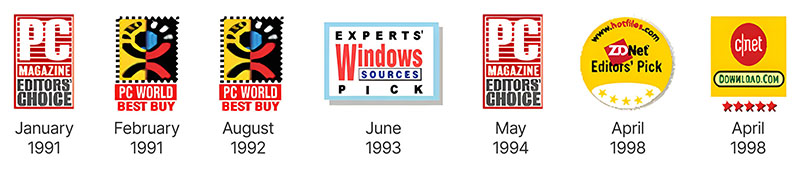
Customers loved DeskTop Set, and the company had a realistic opportunity to become as large as any other major business software company of that era because I had developed one of the earliest integrated electronic contact management and calendar systems for Microsoft Windows.
But I was crushed by diabetes to the point where I could barely walk, couldn't type, couldn't sleep, and suffered a full-blown nervous breakdown over my condition. The closure of that business potentially cost me hundreds of millions of dollars. I never recovered that wealth, but was able to save my life.
I'll be 72 in October of 2026. I am still working full-time as a forensic nutrition researcher, investigative medical writer, and as the CEO of a software startup at an age when most of my contemporaries have either passed away or retired and are barely recognizable from their photos taken 20 years ago, let alone 40 or 50.
The current life expectancy of men in the United States is 76.5 years, but for someone who reaches my age in excellent health, actuarial estimates extend well into the late eighties, with a substantial probability of living into the mid-nineties [link].
Here is my recent photo taken from the raw video footage that I am developing for a video project related to my work. It is unretouched in any way, and my appearance hasn't changed much since my fifties and sixties:
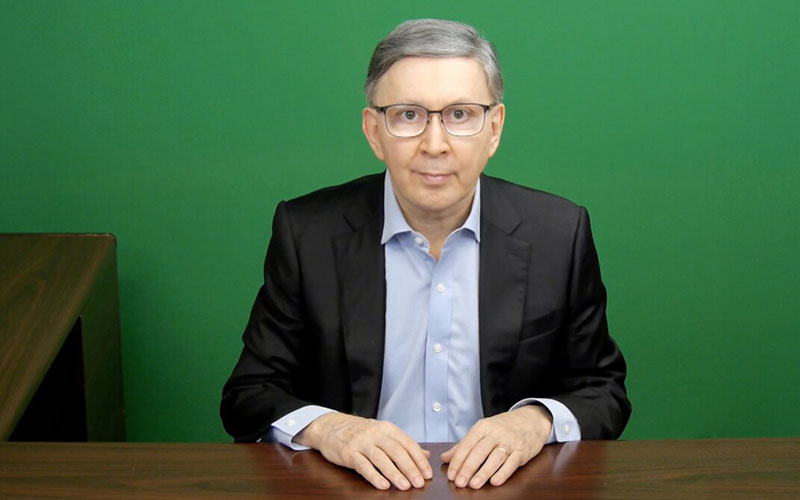
Despite my catastrophic past, I don't have a single chronic condition, don't take any medications, and am strong enough physically, mentally, and emotionally to continue writing health guides for this site and running a software development company that is now building a replacement for DeskTop Set for senior executives and their assistants. I'll tell you more about it in future articles.
The Executive Survival Guide will start with a series of YouTube videos that will focus, among other things, on how to survive the AI revolution regardless of one's age.
Many executives and professionals in their late forties or early fifties are let go during layoffs because they are no longer competitive with the younger generation, not only in terms of health and appearance but also in the physical and mental stamina, emotional stability, memory, focus, and concentration required to master new technologies.
Finding a new job past fifty is exceptionally hard for executives for the same reason. No matter how smart, hard-working, or talented you are, if your appearance implies that you'll need more medical care, won't be as efficient as someone younger, or will be more difficult to work with, you may not be able to find a good job again.
None of it is, of course, spoken, and you may be invited for a few interviews that companies run to prevent discrimination claims, but your chances of getting hired are pretty slim.
Back to the Executive Survival Guide. It is about bulletproofing your career by becoming an A-player, an individual who ranks in the top 10% of all available candidates for an open position or promotion.
A-players are determined by analyzing over 40 individual characteristics, including your leadership, personal, interpersonal, motivational, and intellectual qualities, as well as the unspoken aspects of your appearance, mental acuity, and physical vigor to do the job.
The YouTube guide will include over 40 videos that address each of these characteristics, and I'll keep you informed about each one of them.
However, if you are concerned about your health, energy, and appearance, you can start following my approach now with the following two steps:
Step 1. The majority of functional disorders between 20 and 60 are related to nutrition. They are further exacerbated by medical treatments and medical errors related to those treatments. As long as these conditions are functional, they can be reversed with nutrition and lifestyle changes.
Step 2. Continue following the same nutritional rules that helped you recover from functional disorders to keep them at bay and stay disease-free.
That's it. The first step takes time, but after completing it, you'll experience the same effect as I did and will stay 'frozen' in time vs. your contemporaries.
A Two Million Dollar Question: Why should you do it?
Well, let me do some basic math. Let's say you are a middle-level executive in your mid-forties at a mid-size company earning $140,000 per year before bonuses, 401(k), benefits, and other perks.
If the company lets you go at around 52, your remaining earning potential until 65 with a 3.4% annual increase in salary is approximately $2.83 million.
At 55, it is approximately $2.28 million.
At 60, it is approximately $1.24 million.
I am sure you'll be able to find another job at any of those ages, but most likely it will not be the same. Less salary, no bonuses, no 401(k), fewer or no benefits, and zero perks.
Thus, if you ignore this article, your cost in lost income at 52 will be approximately $2.83 million, at 55, it will be approximately $2.28 million, and at 60, it will be approximately $1.24 million.
These figures exclude bonuses, employer 401(k) contributions, benefits, stock compensation, and other perks, so the total economic value at risk would be higher.
This math also doesn't include a considerable reduction in your Social Security benefits, savings, investments, and other similar factors.
With so much money at stake, I am sure you'll follow my example and continue learning from my videos.
So What is the Magic Pill?
There isn't one. It's a process, and I spent the last twenty-six years documenting all of my discoveries in my three books and on this site. However, I recently updated my findings in 2025 and 2026 with more specific and actionable guides that are particularly appropriate for professionals and executives at all levels past 40.
Each guide explains not only the condition itself and what may be driving it, but also provides detailed, specific steps for reversing or preventing it through holistic measures, primarily nutrition and lifestyle changes. The emphasis is always on practical changes you can actually implement, not on abstract theory or generic advice.
And I didn't write these guides by sourcing consumer-focused websites or learning from YouTube doctors. They are based on my own experience accumulated over the past 30 years, along with decades of working with thousands of clients who were dealing with similar problems. Thanks to newer technology, I also cross-checked every guide with AI to verify the information, identify anything that may have become outdated, and make sure the recommendations remain accurate and current.
You don't need to follow everything at once, and you certainly don't need to turn your life upside down overnight. Start with the problems that affect you the most, understand what is causing them, and make the changes that produce the most significant difference. Once you begin seeing measurable results, the rest becomes much easier to follow.
Here are the guides I recommend to study to improve your health, appearance, energy, mental clarity, and memory starting now:
Konstantin, What Do You Eat?

This guide is first because it is the most important for long-term health, not so much because of what you eat, but because of how much, how often, and in what order. Knowing this prevents you from getting hurt by healthy food. Read more...
Energy Published February 14, 2026Why I Don't Drink Eight Glasses of Water Daily?
This guide is important because up to 65% of your body weight is water and because blood, the essence of life, starts with water too. The problem is that too much water can be even more harmful than too little, and this guide explains why. Read more...
Energy Published March 7, 2026How to Get Better Sleep

If you don't sleep well or enough, you won't have enough energy for work, you will age faster, your memory will decline, and you'll have a hard time maintaining focus and concentration for serious work. This guide provides a good head start.
Read more...
How to Prevent Memory Loss and Dementia
When I was growing up in the early sixties, memory loss and dementia were almost unheard of. Pretty much everyone passed away at some point, but almost no one did so without remembering their own name. Not anymore, and memory problems start appearing as early as the fifties, the peak of executive careers for many. This guide explains why and what you can do to protect your memory. Read more...
Energy Published November 3, 2025How to Prevent and Reverse Low Back Pain
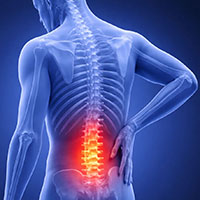
Most work is done sitting down. So are business dinners, business meetings, and business commutes. If your back hurts, you won't be good at any of the above because it's hard to focus on driving, conversation, or serious work while in pain, under the influence of pain medication, or medicating yourself with alcohol. I've been there, and this is a good primer on what to do about it. Read more...
Energy Published October 11, 2025How to Reverse Energy Decline at Any Age

When you walk into any room at work and open your mouth, everyone will immediately feel your energy. It's impossible to fake for longer than half an hour. And it's impossible to be productive without it. This guide is a good place to start rebuilding yours. Read more...
Energy Published September 27, 2025How to Prevent Premature Aging of Your Face

I know, I know... You want to be taken seriously. You don't want to be judged by your looks alone. Neither do I. But that's not how the business world works. Plus, your appearance has a tremendous impact on your confidence, and without it, it's hard to be successful. Read more...
Health Published August 9, 2025How to Identify Nutritional Deficiencies Behind Most Physical and Mental Disorders
The body is built from tissues, bones, blood vessels, and elements from across the periodic table. When those tissues, bones, and blood vessels begin to break down because essential elements are missing, so do the body and mind. This guide will give you a method to determine how well, or how poorly, your body's chemical factory is working. Read more...
Health Published July 19, 202544 Serious Disorders Caused by Salt Deficiency

All the body's "rivers," including blood, lymph, and digestive fluids, are saturated with salt. When you follow seemingly well-meant advice to reduce salt consumption too diligently, you may actually end up reducing your lifespan too. This guide explains how to find a middle ground because, when it comes to salt, too little is just as bad as too much. Read more...
Health Published May 17, 202545 Timeless Recommendations for Bulletproofing Your Gut Against Wrong Food and Bad Habits

As you may well know, health begins and ends in the gut. If you really want a long career on top of a long and healthy life, study this guide with the same intensity you use to prepare for a job interview. Ignore it, and by the time you start paying the price, it's usually too late. Read more...
Gut Sense Published May 10, 2025These ten guides are a small fraction of the life- and career-saving information available on my site, but they are a good start. As I said earlier, not acting on this information is an expensive proposition, and you don't want to throw away millions of dollars in lost opportunities by failing to keep up with the Joneses at work and in life.
Author's note
Most of what I know about health, nutrition, aging, and functional disorders is already documented throughout this site and in my books. What changed is my perspective.
At almost 72 (when I wrote this in August 2026), I can now look back at more than 30 years of illness, recovery, business success, business failure, writing, and rebuilding and see much more clearly what health actually costs when you lose it and what it gives you when you preserve it.
When diabetes destroyed my ability to run the software company I had spent nine years building, the consequences were not limited to my health. They affected my career, income, business, confidence, and financial future, all of which took another two decades to rebuild.
That is why I now look at health not simply as a matter of avoiding disease or living longer, but as a way to remain capable enough to think clearly, work hard, make decisions, manage people, build companies, and stay relevant long after many of my contemporaries can no longer do the same.
***
If this free guide gave you insight into a topic rarely covered by mainstream medical media objectively and in similar depth, that's no accident. I work independently and have no financial ties to pharmaceutical companies, hospitals, or institutional sponsors.
That independence allows me to present the facts without having to serve anyone's agenda. If you find this approach valuable for your well-being, the best way to support my work is by sharing this article with others.
Every repost, forward, or mention helps amplify the reach and makes future work like this possible. Thank you for taking the time to read and for supporting my work!