
How to Prevent Dry Mouth From Damaging Your Teeth and Gums
Some of the highest-earning medical professionals in the United States and elsewhere in the world are dentists. The profession isn't particularly glamorous, but it is remarkably rewarding financially because the human mouth in general, and our teeth and gums in particular, are extraordinarily vulnerable to misuse and abuse.
Much of the dentists' income is driven by preventable damage caused by a seemingly mundane problem known as xerostomia, or dry mouth. Left uncorrected by saliva, it accelerates dental caries, gum disease, alveolar bone loss around the teeth, deterioration of the surrounding connective tissues, including the periosteum, tooth loss, and other problems that require lifelong expensive dental treatments.
In addition to quitely wasting your wealth, dry mouth is also be a real career killer for executives, actors, performers, realtors, teachers, and anyone else whose livelihood depends on talking and close interaction with other people.
The xerostomia's long-term effects on your health are far worse than the effects on your wealth. So, let's start with some statistics.
Epidemiology of Xerostomia
The term xerostomia comes from the Greek words xēros, meaning "dry," and stoma, meaning "mouth," and it is remarkably common. A 2018 systematic review estimated that about 22% of the world's population experiences it. Individual studies report much wider numbers, from about 1% to 65%, largely because researchers study different populations and use different definitions of dry mouth.
In general population studies, the prevalence of xerostomia is 10% to 26% in men and 10% to 33% in women, and becomes much more common with age. About 17% to 40% of older adults experience dry mouth, and estimates rise to roughly 30% after age 65 and as high as 40% after age 80.
Prescription drugs are the biggest reason the numbers rise so sharply with age. In one Swedish primary-care study, 43.6% of patients reported dry mouth, and the rate reached 71.2% among people taking five or more medications.
People with diabetes, autoimmune disorders such as Sjögren's disease, kidney disease, neurological disorders, HIV/AIDS, thyroid disease, and patients undergoing cancer treatment are affected by xerostomia much more often than the general population.
The Toll of the Dry Mouth on Your Health
The health problems caused by chronic dry mouth fall into the following categories:
Sleep disruption. Dryness becomes worse at night because saliva production naturally falls during sleep. People may wake repeatedly to drink water, rinse their mouths from bad taste and smell, or relieve burning, itching, and sticking sensations.
Increased thirst and excessive drinking. Persistent oral dryness can trigger repeated drinking even when the underlying problem is not lack of water. This can become counterproductive in people whose problem involves poor salt retention, nocturnal urination, or impaired salivary gland function.
Bad breath (halitosis). Reduced saliva allows bacteria, food debris, dead cells, and sulfur-containing compounds from rotting and fermentation to accumulate on the tongue and oral tissues. Persistent bad breath is one of the most common outcomes of xerostomia.
Gum disease. A dry mouth allows plaque and bacterial buildup around the teeth and gums. This increases the risk of gingivitis, periodontal disease, gum recession, and eventually tooth loss.
Tooth decay. Saliva washes food particles and acids away from teeth, neutralizes acids, and supplies minerals that help repair early enamel damage. When saliva is reduced, cavities develop quickly, especially along the gumline and on exposed roots.
Difficulty chewing and swallowing. Saliva moistens food, binds it into a soft bolus, and lubricates the mouth and throat. Without enough saliva, dry foods become difficult to chew and swallow and stick to the teeth, palate, tongue, and throat.
Altered taste. Saliva dissolves food components so they can reach the taste receptors. Dry mouth causes a diminished, distorted, or metallic taste and the loss of normal flavor intensity. That's why food no longer tastes as good as you age.
Difficulty speaking. The tongue, lips, and cheeks need lubrication to move freely. Mouth dryness makes prolonged speaking uncomfortable and produces hoarseness and difficulty articulating words commonly associated with aging.
Burning, itching, soreness, and oral pain. Dry oral tissues become fragile and easily irritated. The tongue may burn and itch, the lips may crack, and the lining of the mouth may become tender, inflamed, or painful.
Oral infections. Saliva is part of the mouth's first line of defense. It continuously washes away microbes and contains enzymes, antibodies, and other substances that suppress bacterial and fungal growth. When saliva production falls, bacteria and fungi remain in contact with oral tissues longer and multiply more easily. This increases the risk of oral thrush, gum infections, mouth sores, and recurrent inflammation of the mouth and throat.
Increased risk of respiratory infections. Saliva helps trap, neutralize, and remove microbes before they move deeper into the respiratory tract. When the mouth remains chronically dry, this protective barrier becomes less effective, increasing susceptibility to infections of the throat and respiratory tract.
Mouth sores and tissue injury. Without normal lubrication, friction from food, teeth, dentures, and normal mouth movement can produce abrasions, ulcers, fissures, and recurrent irritation.
Poor digestion of food. Digestion begins in the mouth. Saliva moistens food and contains enzymes that begin breaking down starches and fats. Reduced saliva also makes food harder to chew thoroughly, which increases the load on later stages of gastric and intestinal digestion.
Unstable dentures. Dentures depend on saliva for lubrication and retention. With a dry mouth, they may rub, slip, cause sores, and become difficult or painful to wear.
Difficulty tolerating acidic, salty, spicy, or dry foods. When the protective salivary film is reduced, foods that are normally tolerated can sting, burn, and irritate the mouth.
Progressive deterioration of oral health. The long-term damage is cumulative. Dry mouth can simultaneously increase cavities, gum disease, infection, tissue injury, and swallowing problems. Once several of these problems develop together, they begin to reinforce each other.
Nutritional deficiencies. Chronic xerostomia makes chewing and swallowing uncomfortable, reduces taste, and discourages eating. The reduced food intake contributes to deficiencies of protein, vitamins, minerals, and other essential nutrients.
Emotional distress. Continuous burning, itching, soreness, thirst, difficulty speaking, disrupted sleep, and eating problems cause irritability, anxiety, poor concentration, social withdrawal, and a lower stress tolerance. Chronic pain and discomfort also make people more preoccupied with their symptoms, which further amplifies the perception of dryness.
Dry nasal mucosa. Dry mouth and nasal dryness often occur together. The underlying mechanisms are different because the moisture in the mouth is provided by saliva, while moisture in the nasal passages comes solely from mucus. Unfortunately, nasal dryness interferes with normal nasal breathing, forces more mouth breathing, and exacerbates xerostomia even further.
The 43 Well-Recognized Functional Causes of Xerostomia
This list is far more extensive than those found in professional sources such as The Merck Manual of Diagnosis and Therapy or WebMD. It isn't because their writers are lazy, or because I am unusually smart, but because I take a much broader view of this condition and bring over three decades of research, writing, and personal experience with this subject that medical writers in their thirties and forties don't usually have.
As you can imagine, within the confines of a single guide, I can't provide detailed recommendations on how to prevent or reverse every one of xerostomia causes. In most cases, the answers are fairly self-evident: don't do this, don't eat that, get rid of that habit, don't take that, don't behave this way, and on, and on, and on.
So, please read the list, item by item, make mental and written notes of which one of them may pertain to you, and apply common sense to prevent or eliminate these causes from your life.
My site already provides exceptionally detailed guides on many of these causes, so take the time to read and follow them as well.
There is another reason to do this homework: there is no medical specialty known as a "Board-Certified Xerostomist" that you can look up on ZocDoc or get a referral to from your dentist, ENT specialist, or family physician.
For your convenience, I grouped the primary causes of xerostomia into related categories, such as metabolism and fluid balance, digestion and absorption, medications, breathing and environmental factors, oral and salivary gland problems, lifestyle habits, and others.
Most of these causes overlap and reinforce one another, so dry mouth is often the result of several problems acting at the same time rather than one isolated condition.
Let's start with the most common causes:
Chronic Micronutrient Deficiencies
This section is first because these problems begin at a relatively young age, and can affect people who already take consumer-grade or outdated professional-grade formulations.
Vitamin A deficiency. Vitamin A as retinol, retinyl esters, β-carotene, and several other provitamin carotenoids, is required for normal development and maintenance of the tissues lining the mouth and for normal function of secretory glands. Its deficiency can produce abnormal oral tissues, reduced gland function, and dry mouth.
Vitamin C deficiency. Vitamin C deficiency is associated with xerostomia as well as inflamed and damaged gums and other oral changes. The connection is recognized in reviews of vitamin deficiencies and oral disease.
Vitamin B12 deficiency. B12 deficiency is strongly associated with oral problems including burning tongue, glossitis, altered taste, and mucosal changes. One clinical series found B12 deficiency in about 29% of patients with atrophic glossitis, with xerostomia present in about 42%.
Vitamin B9 (folate) deficiency can damage rapidly renewing oral tissues and frequently accompanies B12 deficiency and anemia. It is associated with glossitis and other oral symptoms.
Vitamin B2 (riboflavin), B3 (niacin), and B6 (pyridoxine) deficiencies; produce characteristic changes in the tongue and oral lining, including glossitis, inflammation, cracking, burning, and soreness.
Vitamin D deficiency is associated with dental caries, periodontal disease, inflammation of the gums and oral mucosa, impaired immune defenses, slower tissue repair, increased susceptibility to oral infections, and changes in salivary gland function. All of these conditions are direct contributors to xerostomia.
Genetic problems with B-group vitamins metabolism. A common genetic variation known as MTHFR C677T reduces the efficiency of an enzyme involved in folate (B9) metabolism. More than 50% of Americans carry at least one copy of the common MTHFR C677T variant, while roughly 10% to 15% carry two copies, which has a much stronger effect on folate metabolism.
Other genetic variations can also interfere with the transport, conversion, or use of vitamins B2, B6, and B12. As a result, some people may take consumer-grade or older professional-grade multivitamins daily but still develop functional deficiencies because these vitamins are not processed efficiently enough inside the body. These deficiencies affect the tongue, lining of the mouth, nerves, and salivary function and contribute to chronic xerostomia.
In addition to the above oral problems, genetic variations that interfere with B-vitamin metabolism are behind fatigue, weakness, headaches, poor concentration, memory problems, irritability, depression, numbness or tingling in the hands and feet, impaired balance, muscle weakness, anemia, and elevated homocysteine, which damages blood vessels, promotes clotting, and increases cardiovascular and neurological risks.
The important point is that these problems may develop even when blood tests appear normal. A person can consume adequate amounts of B vitamins and still have difficulty assimilating them efficiently. In more pronounced cases, impaired B12 metabolism can produce peripheral neuropathy, walking difficulties, cognitive and psychiatric symptoms, anemia, and other neurological problems.
In my own case, I take the Coenzymated Once Daily Multi formula and Coenzymated Methyl B-12 Vitamin. Both are available on our site. They are specifically formulated for people who have difficulty converting or using conventional forms of B vitamins efficiently.
The same formula also covers your basic needs for essential minerals and trace elements, such as zinc, selenium, copper, manganese, chromium, iodine, and molybdenum, which directly or indirectly support the health of the oral mucosa, salivary glands, immune defenses, tissue repair, and cellular metabolism.
Digestion and Intestinal Absorption
Delayed stomach emptying. When food and fluids remain in the stomach for too long, water is not delivered to the intestines for absorption at a normal rate. This can leave the rest of the body relatively short of usable fluid despite drinking enough.
Chronic inflammation of the small intestine. The small intestine absorbs a large share of the water that enters the digestive tract. When its lining is inflamed, it cannot absorb water and salt efficiently. More fluid remains inside the intestine and is eventually lost through the stool.
High-protein diet. Large amounts of protein place a greater demand on stomach digestion and can slow stomach emptying, particularly when digestion is already impaired. Breaking down and eliminating protein also increases the body's water requirement.
Acid reflux, heartburn, and GERD expose the esophagus, throat, and mouth to stomach acid and gastric enzymes. Repeated acid exposure damages salivary-gland function and reduces the amount of saliva produced and its ability to neutralize acids.
Functional or organic deficiency of stomach acid and digestive enzymes. Proper digestion begins in the stomach. When acid or enzyme production is too low, food is not processed normally, stomach emptying slows, dry mouth becomes more likely, and nutrient deficiencies starts to develop. This is a common problem among older adults, especially after protein-rich meals.
I have noted that when I take digestive enzymes after large meals containing dense meats, fish, or seafood, I am much less likely to wake up in the middle of the night with a dry mouth because enzymes speed up digestion and stomach emptying, allowing food and digestive fluids to move into the small intestine sooner, where most water absorption takes place.
Myself, my family, and thousands of our clients have been taking Gastrozymes Digestive Enzymes formula since the early 2000s with good results. I usually take one tablet after a regular dinner and two tablets after slightly overeating or consuming dense proteins such as shrimp, lobster, salmon, turkey, or chicken breast.
Probably for the same reason, I haven't had a single instance of food poisoning in the past thirty years. When digestion works well, hydrochloric acid and proteolytic enzymes destroy viruses, bacteria, single-cell parasites, worms, and other pathogens before they can reach the small intestine in sufficient numbers to cause trouble.
Fluid Balance, Metabolism, and Stress
Dehydration. Inadequate water intake, excessive urination, sweating, diarrhea, vomiting, fever, or diuretic use reduces the amount of fluid available for saliva. Dry mouth is commonly associated with all of these conditions.
High blood sugar. Excess glucose pulls water out of tissues and increases water loss through the kidneys. The result is less water available for saliva and a persistent sensation of dry mouth.
High insulin. Chronically elevated insulin interferes with normal fluid and mineral balance and usually travels together with unstable blood sugar. Dry mouth can be one of the signs that this system is no longer working normally.
High stress. Dry mouth is a normal part of the fight-or-flight response. During public speaking, family arguments, fear, anger, confrontation, or other intense stress, the body shifts away from digestion and routine salivary activity. Saliva production drops, the mouth becomes dry, and the remaining saliva feels thicker or stickier.
High cortisol. Stress hormones suppress digestion, alter fluid balance, and reduce normal saliva production. This is why dry mouth commonly appears during prolonged stress, lack of sleep, overwork, or emotional strain.
Nocturnal polyuria. Excessive urine production during the night removes water and salt while you are asleep and not replacing either. By morning, the resulting drop in body fluids can reduce saliva production and leave the mouth unusually dry.
Too much salt. Excess salt requires body fluids to reduce salt concentration and triggers thirst. The mouth may become dry even when there is no major shortage of water in the body.
Too little salt. Salt is needed to retain water and maintain normal fluid volume. When salt intake is too low relative to water intake or fluid losses, the body has difficulty retaining water, leaving less of it for normal saliva production. I do realize that having too much and too little of salt may confuse you, but that's how the human body is made, and you are the only person who can control it. I do have a detailed Guide to help you keep this balance normal: 44 Serious Disorders Caused by Salt Deficiency.
Excessive exercise. Prolonged or intense exercise can cause dry mouth through several mechanisms at once. Sweating removes water and salt, heavy breathing increases evaporation from the mouth, and repeated training without adequate recovery can raise cortisol and disturb normal blood sugar and insulin regulation.
Breathing, Environment, and Speaking
Mouth breathing. Breathing through the mouth, especially during sleep, continuously evaporates moisture from the tongue, gums, palate, and other oral surfaces. Nasal congestion, snoring, and sleep apnea are common reasons.
Dry air and heated or air-conditioned environments. Low ambient humidity accelerates evaporation from the mouth, particularly during sleep. This becomes much more important when combined with mouth breathing.
Prolonged speaking. Public speakers, lecturers, salespeople, broadcasters, and anyone talking continuously can develop dry mouth through increased evaporation, reduced opportunities to swallow, and stress-related suppression of saliva.
Medications and Laxatives
Medications that reduce saliva production. Many commonly used drugs interfere with normal salivation. These include antidepressants, decongestants, blood-pressure drugs, diuretics, pain medications, and drugs with anticholinergic effects. The risk rises when several such medications are taken together.
Antihistamines. Antihistamine drugs commonly cause dry mouth because they interfere with the nerve signals involved in normal saliva production. The effect is especially noticeable with older antihistamines, although newer ones can cause it as well.
GLP-1 drugs. Drugs such as semaglutide can contribute to dry mouth through several mechanisms, including reduced food and fluid intake, nausea, vomiting, and delayed stomach emptying. They may also affect saliva production directly.
Drinks, Alcohol, Smoking, and Local Irritation
Alcohol. Alcohol increases water loss, can interfere with normal saliva production, irritates the lining of the mouth, and often worsens mouth breathing during sleep.
Caffeine. Coffee, strong tea, energy drinks, and other caffeinated products can worsen dry mouth through stimulation, increased urination in susceptible people, and repeated exposure of already dry oral tissues.
Smoking, vaping, and cannabis. All three are associated with dry mouth. Smoking and vaping can irritate oral tissues and affect salivary function, while cannabis can suppress the nerve activity that stimulates saliva.
Alcohol-containing mouthwash. Mouthwash that contains alcohol can dry and irritate the tissues inside the mouth, particularly when used repeatedly or when saliva production is already reduced.
Very hot drinks. Very hot coffee, tea, broth, and other beverages can dry and irritate the lining of the mouth. Heat also increases evaporation from oral surfaces.
Phosphoric acid in soft drinks. Cola and similar soft drinks expose the mouth to a strong acid load. Saliva must continuously dilute and neutralize this acid, particularly when the drink is sipped over a long period.
Oral and Salivary Gland Problems
Food allergies and sensitivities. Reactions to food can inflame the lining of the mouth and throat, cause nasal congestion and mouth breathing, and sometimes trigger diarrhea or vomiting that reduces body fluids. The antihistamines commonly used to control allergic symptoms can make the dryness worse by suppressing saliva production.
Oral inflammation. Inflammation of the gums, tongue, palate, or tissues around the salivary duct openings can cause swelling and narrow the small passages through which saliva enters the mouth.
Poor salivary-gland function or impaired drainage. Salivary glands may produce too little saliva because of nerve damage, chronic inflammation, obstruction, or damage to the glands themselves. Drinking more water may have little effect because the problem is the production and delivery of saliva.
Salivary stones and duct narrowing. These physically interfere with the delivery of saliva into the mouth. They can produce intermittent swelling of the major glands, pain around meals, reduced salivary flow, or localized dryness.
Autoimmune damage to the salivary glands. Sjögren's disease is the major cause of this condition. The salivary glands themselves become damaged and can no longer produce enough saliva.
Radiation to the head and neck. Radiation treatments directly damage salivary glands and produce severe, persistent dry mouth.
Chemotherapy. Many chemotherapy drugs can cause dry mouth by temporarily damaging the salivary glands, changing the composition of saliva, and injuring the rapidly renewing tissues that line the mouth. Unlike radiation damage, chemotherapy-related dry mouth is often temporary and salivary function commonly improves after treatment ends.
Salivary dysfunction and altered saliva composition. Xerostomia is not always caused by insufficient saliva. Saliva may become unusually thick or stringy, lose some of its normal lubricating and buffering properties, or fail to drain properly because of gland inflammation, stones, or narrowed ducts. These disorders are described as salivary gland hypofunction, qualitative salivary dysfunction, sialadenitis, sialolithiasis, or salivary duct stenosis, depending on the underlying pathology.
Mechanical and Perceptual Contributors
Dentures. Full or partial dentures cover substantial areas of the gums and palate and depend on saliva for lubrication. When saliva is already reduced, dentures increase friction and make dryness substantially more noticeable.
Dry-mouth sensation after prolonged gum chewing. Chewing gum temporarily produces a large increase in saliva. When chewing stops and saliva returns to its normal resting level, the mouth can suddenly feel much drier by comparison even when salivary production has not fallen below normal.
This list represents some of the better-known causes of xerostomia. I am sure there are other conditions, combinations of conditions, medications, habits, and individual factors that may contribute to dry mouth as well. The important point is that xerostomia rarely has just one cause, especially in older adults, so the more contributing factors you identify and eliminate, the better your chances of correcting the problem.
Why Medications Cause Dry Mouth
Hundreds of prescription and over-the-counter drugs can cause dry mouth. Some interfere with the nerve signals that activate the salivary glands, while others reduce body fluids, change blood pressure, slow digestion, or alter the composition and flow of saliva. The problem becomes more common when several medications with similar effects are taken together.
The main classes of drugs associated with dry mouth include:
Antidepressants, including SSRIs, SNRIs, and tricyclic antidepressants.
Antihistamines, particularly older drugs such as diphenhydramine (Benadryl) and chlorpheniramine.
Decongestants, including pseudoephedrine and phenylephrine.
Anticholinergic drugs, including medications for overactive bladder, intestinal spasms, motion sickness, and Parkinson's disease. These are among the strongest suppressors of saliva because they directly block the signals that tell salivary glands to work.
Blood-pressure medications, including some beta blockers, centrally acting drugs such as clonidine, and other antihypertensives.
Diuretics, including hydrochlorothiazide and furosemide, which increase the loss of water and salt through urination.
Antipsychotic drugs, including quetiapine, olanzapine, and clozapine.
Anti-anxiety and sedative drugs, some of which reduce saliva directly or worsen mouth breathing during sleep.
Opioid pain medications, which can suppress saliva production and reduce normal fluid intake.
Anticonvulsants and other neurologic drugs, some of which interfere with normal salivary gland function.
Bronchodilators and some asthma medications, particularly drugs with anticholinergic activity.
GLP-1 drugs, including semaglutide and related medications. These can contribute through reduced drinking and eating, nausea, vomiting, delayed stomach emptying, and possibly direct effects on saliva production.
Drug-induced dry mouth is particularly common in people taking several medications at the same time. The individual effects may be modest, but together they can reduce saliva enough to cause persistent dryness, difficulty swallowing, altered taste, bad breath, mouth irritation, and accelerated tooth decay.
Why Aging Increases Dry Mouth
Dry mouth becomes more common with age, but aging itself is usually not the only cause. Older adults are more likely to take several medications, develop diabetes or other metabolic problems, experience reduced thirst, lose more water through frequent urination, breathe through the mouth during sleep, and develop problems with digestion, nutrient absorption, or salivary-gland function.
Salivary glands can also undergo structural changes with age, including loss of functional tissue and increased fatty replacement, which may reduce their reserve when the body is stressed.
The result is that older people have less margin for error: dehydration, high blood sugar, medications, illness, poor nutrition, or a few nights of mouth breathing can produce dry mouth much more readily than they would in a younger person.
Professional Hazards of Dry Mouth
Dry mouth can become a serious problem at work if you have to speak for a living. It affects executives, lawyers, teachers, salespeople, physicians, broadcasters, customer service workers, and anyone who spends much of the day talking to other people.
Once the mouth dries out, speech becomes less comfortable and fluid. The tongue starts sticking, the throat gets scratchy, and you may need to stop for water in the middle of a meeting, presentation, interview, or negotiation.
Dry mouth often comes with bad breath, cracked lips, mouth sores, coughing, throat clearing, and changes in the voice. None of this is easy to hide when you work closely with other people.
Constant discomfort is also distracting. It makes harder to concentrate, shorten your patience, and wear you down during a long workday.
Persistent mouth discomfort can also interfere with concentration and shorten your tolerance for long meetings or difficult conversations.
Stress makes the problem worse. Public speaking, interviews, negotiations, arguments, and confrontations can dry the mouth within minutes for reasons I described above. Once that happens, speaking becomes more difficult, which increases stress and dryness even more.
For anyone whose work depends on clear speech and sustained interaction with other people, dry mouth is a real professional handicap.
Takeaways
Drinking more fluids isn't an instant fix for dry mouth past the late teens. It's a complex, multifaceted, and destructive problem that affects an enormous number of people worldwide.
Dry mouth becomes more frequent with age and can gradually damage your teeth, gums, oral tissues, sleep, digestion, speech, professional performance, and resistance to infections. In many people, the problem becomes chronic because several causes operate at the same time rather than one isolated disorder.
The causes are far broader than most medical summaries suggest. They include micronutrient deficiencies, genetic problems with B-vitamin metabolism, poor digestion and intestinal absorption, dehydration, high blood sugar, high insulin, high cortisol, stress, abnormal salt intake, nocturnal urination, mouth breathing, dry air, medications, alcohol, caffeine, smoking, oral inflammation, salivary gland disorders, cancer treatments, and many other factors.
The most common mistake is to treat dry mouth simply by drinking more water. That may help when dehydration is the main cause, but it does little when the real problem is poor digestion, abnormal fluid balance, medications, impaired saliva production, inflammation, nerve damage, or blocked salivary ducts. In some cases, excessive drinking can make the problem worse by increasing urination and compromising salt and fluid balance.
The problems accumulate over time. Less saliva means less protection against acids, bacteria, fungi, friction, and mechanical injury. That's why chronic dry mouth is associated with tooth decay, gum disease, bad breath, oral infections, mouth sores, difficulty chewing and swallowing, altered taste, speech problems, sleep disruption, and persistent discomfort.
The practical solution is to identify which of the 43 causes presented above apply to you and remove as many of them as possible.
There is no single pill, rinse, or amount of water that can correct every form of xerostomia. The cause determines the solution, and in most cases, the best results come from correcting several seemingly unrelated problems at the same time.
This becomes especially important with age because older adults take more medications, experience more metabolic and digestive problems, lose more water through urination, and are more likely to develop changes in salivary gland function.
Author's note
I am familiar with this topic well because I suffered from oral lichen planus in acute form from 2001 to 2019. This non-transmittable disorder causes white patches, ulcerations, inflammation, itching, burning, and other uncomfortable changes in the tongue and lining of the mouth, and dry mouth makes these symptoms considerably worse. This is approximately what it looked like (and, no, this isn't my photo):
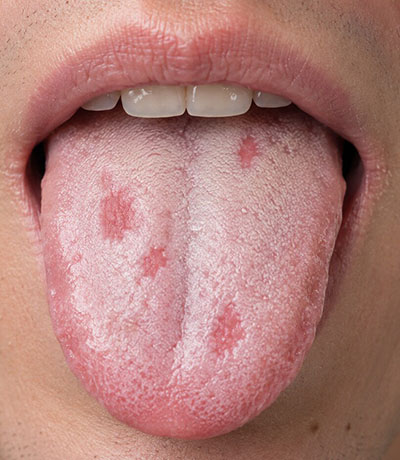
Oral lichen planus is generally classified as an immune-mediated disorder, but in my own case I believe dental amalgams were driving or aggravating it. I had two old amalgam fillings underneath crowns placed in the early 1980s.
My dentist had removed all of my exposed amalgam fillings in the early 1990s, but neither of us realized that these two were still hidden beneath the crowns. They were finally removed in 2016.
In my case, the inflammation and itching gradually diminished after the remaining amalgam was removed and nearly disappeared after I started taking coenzymated forms of B vitamins around 2019. Lichenoid lesions that occur next to amalgam restorations often improve or disappear after the amalgam is replaced. [PubMed]. And, of course, I also eliminated all the triggers described above.
Please share this guide with your partner, adult children, friends, and associates who may benefit from it.
***
If this free guide gave you insight into a topic rarely covered by mainstream medical media objectively and in similar depth, that's no accident. I work independently and have no financial ties to pharmaceutical companies, hospitals, or institutional sponsors.
That independence allows me to present the facts without having to serve anyone's agenda. If you find this approach valuable for your well-being, the best way to support my work is by sharing this article with others.
Every repost, forward, or mention helps amplify the reach and makes future work like this possible. Thank you for taking the time to read and for supporting my work!