
Dietary fiber: A heart savior from heaven, or a death wish from hell?
Dietary fiber in food and supplements is broadly promoted for the prevention of heart disease because, allegedly, it lowers cholesterol. Actually, this is a lie — not only does fiber not prevent heart disease, it also increases your risk of atherosclerosis, heart attack, sudden cardiac arrest, and stroke by reducing HDL (“good” ) cholesterol and blocking the assimilation of essential nutrients. The report also focuses on fiber's role in malnutrition, obesity, diabetes, and digestive disorders.
I look younger in this video than I do now because I made it in the spring of 2009, when I was 53:
Introduction
Greetings! My name is Konstantin Monastyrsky (bio). I am a medical writer, performance nutrition consultant, and an expert in forensic nutrition (background). The subject of this investigative report is the popular claim that dietary fiber in food and supplements may reduce your risk of heart disease!
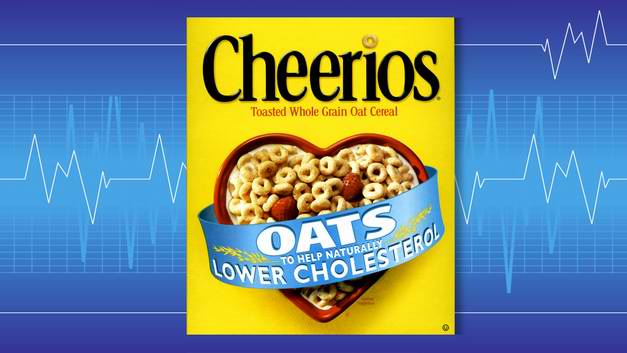
This is, for example, a box of Cheerios Toasted Whole Grain Oat cereal with a heart-shaped cereal bowl right in the center, and a blue banner across: “Oats, To Help Naturally Lower Cholesterol!” — it proclaims.
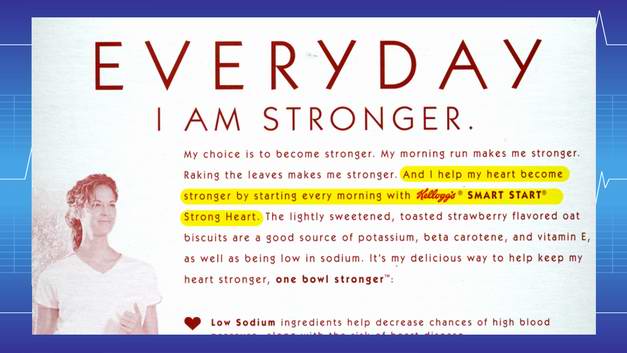
This cereal calls itself Strong Heart — the height of cynicism, considering its carbs-loaded content. Again, a heart-shaped bowl upfront, the same indirect promotion on the back: “I help my heart become stronger by starting every morning with Kellogg's Smart Start Strong Heart!”
Sure, dream on...
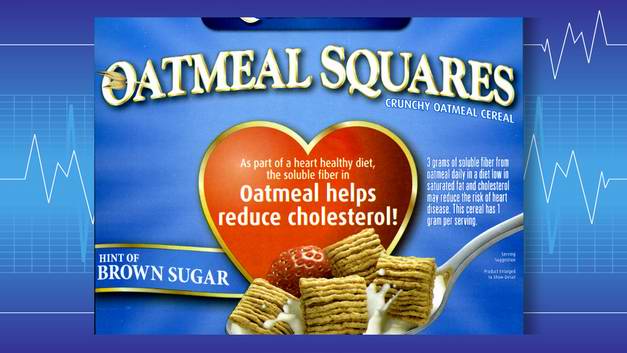
Not to miss the party, this is Quaker Oatmeal Squares from the granddaddy of oats cereals. Exact same deal: the heart in the center of the box, and the message: “Oatmeal helps reduce cholesterol.”
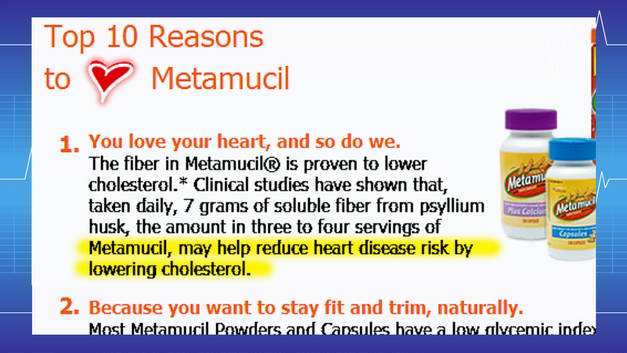
You don't eat morning cereals? Then, this popular fiber laxative is ready to save you: “Metamucil may reduce heart disease risk by lowering cholesterol” — claims its web page [1].
And It also promotes itself as a weight loss supplement, digestive aid, diabetes preventive, and osteoporosis remedy... Oh, my!
Actually, none of these claims are true. Neither Cheerios Oat cereal, nor Quaker Oatmeal, nor Kellogg's Smart Start, nor Metamucil will lower your cholesterol significantly enough to protect you from heart disease.
In fact, it is an intentional and well-practiced lie, because according to all the clinical studies ever conducted, the effect of soluble fiber in oats and psyllium on blood cholesterol level is so insignificant, it can't materially reduce anyone's chance of developing heart disease.
The most objective and representative of these studies was published in the highly respected Journal of American Clinical Nutrition under the title “Cholesterol-lowering effects of dietary fiber: a meta-analysis.”
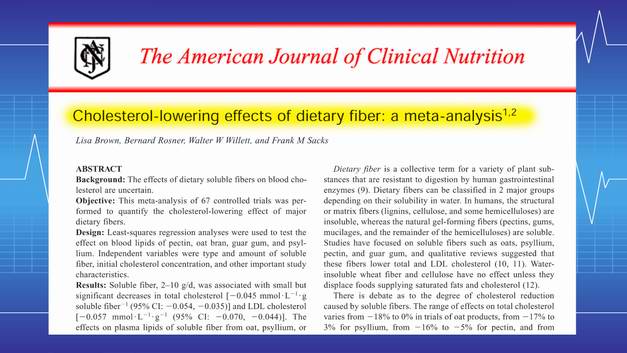
In this particular research the scientists from the Harvard University Medical School and the Harvard School of Public Health analyzed the results of 67 completed clinical trials in order to determine the median affect of fiber from oats and psyllium on blood cholesterol.
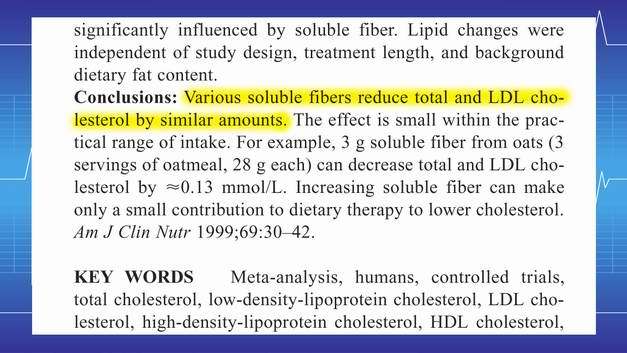
And this is what they concluded:
“Various soluble fibers reduce total and LDL cholesterol by similar amounts. The effect is small within the practical range of intake. For example, 3 grams soluble fiber from oats - that's 3 servings of oatmeal at 28 grams each - can decrease total and LDL cholesterol by approximately 0.13 mmol/dL. Increasing soluble fiber can make only a small contribution to dietary therapy to lower cholesterol.” [2]
And this is what it all means in plain English:
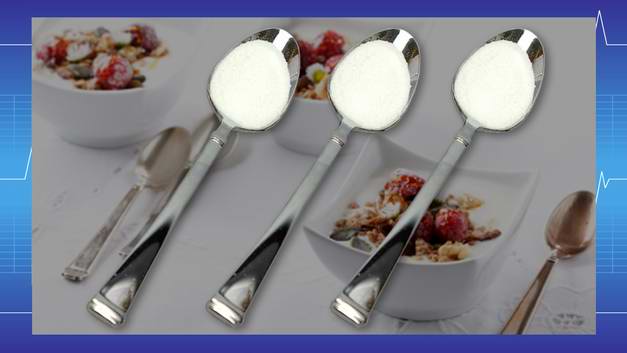
To begin, you need to consume three full servings of oatmeal to affect your cholesterol level by a small amount. That's 48 grams of pure carbs in just one meal, or the equivalent of having three full tablespoons of sugar. For anyone suffering from heart disease or diabetes, that many carbs for breakfast alone is literally a 'death wish.'
Next, three servings of fiber decrease total and LDL cholesterol by just 0.13 mmol/dL — that is a scientific measurement which translates to a tiny 5 milligram per deciliter of blood. Thus, if your total cholesterol, for example, is 280 mg/dL, adding fiber will reduce it only to 275 mg/dL. As any cardiologist will tell you, 1.7% reduction of total cholesterol is as helpful as prayer. Well, actually, prayer is probably more helpful...
“As any cardiologist will tell you, 1.7% reduction of total cholesterol is as helpful as prayer. Well, actually, prayer is probably more helpful...”
Finally, increasing fiber consumption above three servings isn't practical. The reduction of cholesterol from extra fiber is just too small to count on... If that's what you are after, you'll need a prescription...
By this point I wouldn't be surprised if you ask me the following question:
— Mr. Monastyrsky, but how come these companies promote fiber to prevent heart disease when doing so is absolutely pointless?
Well, they are certainly not expecting you to study The American Journal of Clinical Nutrition the way I did. In the minds of their marketing and sales executives you are just a total schmuck!
They know — if they repeat often enough that fiber lowers cholesterol, eventually everyone, from your uncle's dog to your doctor, will buy into the myth that fiber prevents heart disease.
Naturally, the next question is:
— Mr. Monastyrsky, it can't be true that they are all so wrong about fiber... Can you prove it?
Absolutely! Lets review the facts...
Part 2. The facts
Exposing The Impostor: A Low-Fat Diet Brings Down Cholesterol Even More Without Fiber...
Anyone who reads small print, knows that fiber has no effect on cholesterol unless it is also accompanied by a low-fat, low-cholesterol diet. What is not as well known — the exact same diet reduces cholesterol even more when fiber is removed. Here are the facts:
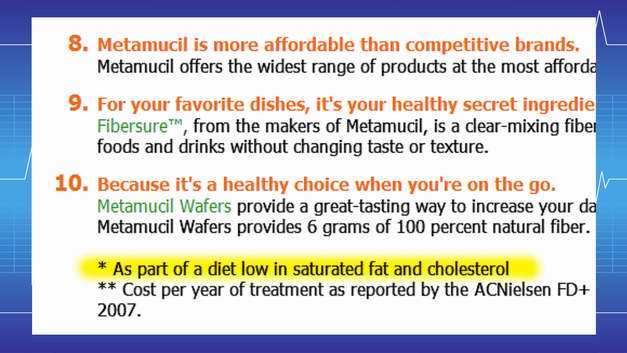
Lets begin from the perfunctory small print, just like on this web page: “The fiber in Metamucil is proven to lower cholesterol*” Then, the footnote explains: Only “...as a part of diet low in saturated fat and cholesterol.” [3].
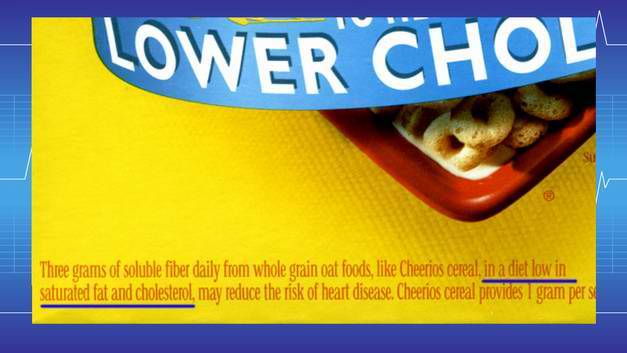
Here is Cheerios Oat Cereal: “Oats lower cholesterol,” — and the exact same catch in the small print at the bottom: “...in a diet low in saturated fat and cholesterol.”
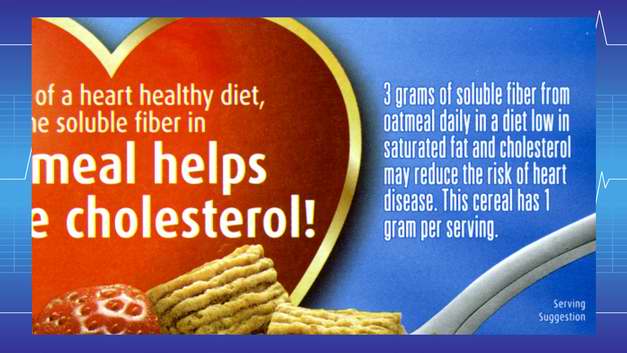
And again -- the identical stipulation on the box of Quaker Oatmeal Squares: “...in a diet low in saturated fat and cholesterol"
These disclaimers are actually required by the Food and Drug Administration to accompany health claims [4 (oats), 5 (psyllium)], related to fiber and cholesterol because, according to the American Heart Association,
“A fiber supplement added to a diet otherwise high in saturated fat and cholesterol provides dubious cardiovascular advantages.” [6]
Ironically the exact same low-fat diet reduces cholesterol even more without any fiber, and that is the top reason why the American Heart Association has been promoting low-fat food in the first place.
In essence, it was well known in advance that adding fiber to a diet low in fat and cholesterol will demonstrate some cholesterol reduction simply because this is what these diets do with or without fiber!
And it also means that all of these clinical trials of fiber's prowess amount to nothing but a well-staged charade to justify the marketing of oat cereals and psyllium laxatives as functional food, capable of preventing heart disease.
So, there you have it:
—Add soluble fiber to a low-fat, low-cholesterol diet, and you get a meaningless 1.7% reduction of cholesterol;
—Or, endure the exact same diet without fiber, and your cholesterol goes down six to seven percent;
—Or, if you missed the small print, and are enjoying your regular diet, extra fiber will have zero effect on cholesterol, except hastening the arrival of heart disease from all those extra carbs in your bowl of oatmeal -- the exact opposite of what you are expecting from adding fiber to your presumably healthy diet!
Not an easy choice...
Flirting With The Devil: Low-Fat, Low-Cholesterol Diets Increase The Risk Of Heart Disease
As incredulous as it may sound, a diet low in fat and cholesterol, recommended to accompany fiber, may actually increase your risk of heart disease. When most of the fiber trials were conducted in the nineties, the most prominent brand of the low-fat, low-cholesterol diet was called Step I [7], and it was heavily promoted by the American Heart Association to reduce blood cholesterol. The Step I diet contained less than 5% of saturated fat, very little cholesterol, and a ton of carbs -- 40% to 50% to be exact.
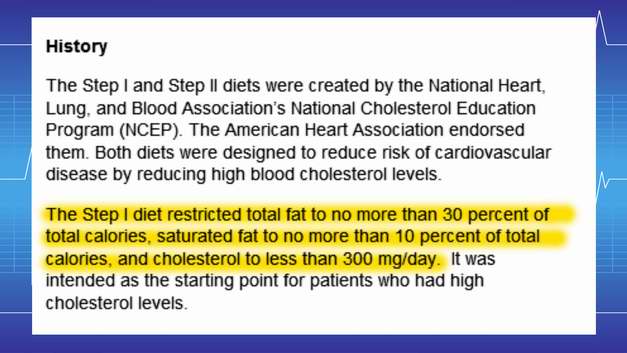
Author's note: I refer to the Step I diet's saturated fat content by weight (g, 5%), while the AHA refers to it by caloric value (cal, 10%). This tactic is commonly used by the promoters of low-fat diets to make them appear less restrictive. Since each gram of fat contains 9 calories, the ratio by weight is slightly less than half of its caloric value.
It wouldn't be such a big deal if the Step I diet was just a harmless, poor-tasting chow if not for this catch... The Division of Gerontology at the University of Maryland has investigated the effects of the Step I diet on postmenopausal overweight women - one of the highest risk groups for heart disease. Their findings were duly reported by the Journal of the American Dietetic Association. [8]
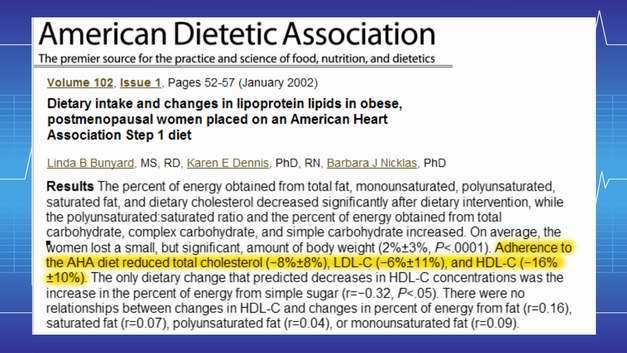
As was expected, the Step I diet reduced the ladies total and LDL cholesterol by 8% and 6% respectively, but their HDL cholesterol fell by a whopping 16%. The medical community wasn't pleased. Here is what Dr. Alan Gaby wrote in the article entitled Problem with American Heart Association Step I diet and published by the highly regarded Townsend Letter for Doctors and Patients:
"In women, a low HDL cholesterol concentration is a stronger independent predictor of cardiovascular disease risk than is elevated total cholesterol or LDL cholesterol. Therefore, women who follow American Heart Association guidelines for lowering their serum cholesterol may actually be increasing their risk of heart disease" [9]
So, there you have it again: Adding fiber to a low-fat diet, low-cholesterol may actually increase your risk of heart disease, particularly if you happen to be a woman close to or after the menopause.
Guess what the American Heart Association did in response to this fiasco...
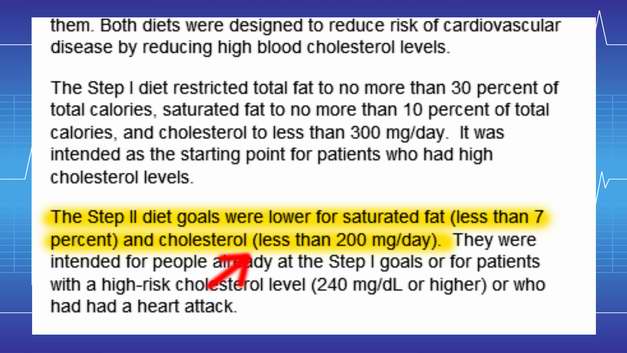
What else do you expect -- it replaced the disgraced Step I diet with brand new Step II. This 2.0 update restricted fats even more, and, at the same time, increased the carbs content up to 60%!
So I wasn't at all surprised to read* in a recent study by the Harvard School of Public Health [10], that “the life expectancy for American women is declining for the first time since the Spanish influenza epidemic in 1918.” [11].
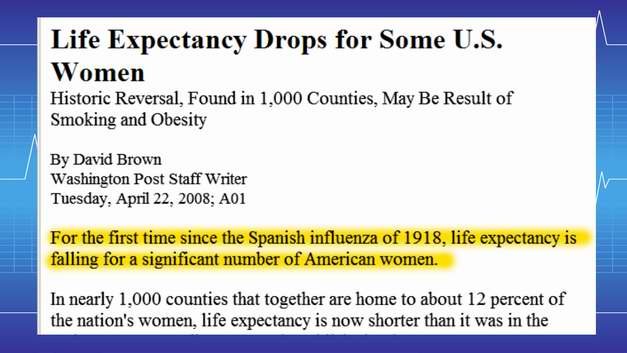
With a fiber-fortified diet like Step Two, how can it not?
Author's note: In video I read the quote from the Washington Post article about theunderlying Harvard's research while referring to the research itself. Both links are provided above
No Bugs, Time To Worry: Fiber Cause Serious Side Effects, Particularly In Healthy Individuals
Fiber's side effects on digestion are an open secret. The moment, for example, a patient is admitted into the GI wing of any hospital, physicians immediately prescribe a low-density diet, which is doctor-speak for fiber-free fare.
And the healthier you are -- the stronger the side effects. When there aren't any, it simply means fiber is passing through your intestines unfermented because the bacteria were killed sometime ago, usually by the antibiotics or heavy metals in dental amalgams.
But as long as your intestinal flora is alive, fiber stimulates fermentation, just like when making beer or wine. The resulting build up of gases and acids causes bloating, abdominal cramps, flatulence, and, often, diarrhea.
These unpleasant conditions are commonly blamed on gluten sensitivity, lactose intolerance, yeast overgrowth, parasites, irritable bowel syndrome, inflammatory bowel disease, diverticulosis, and even premenstrual syndrome, while, in reality, they all result from the fermentation of fiber, plain and simple.
If you doubt my words, that much is said on the warnings that accompany any laxative with psyllium fiber. Here is a representative example from Rite Aid's web site [large drug store chain in the United States — Ed.]:
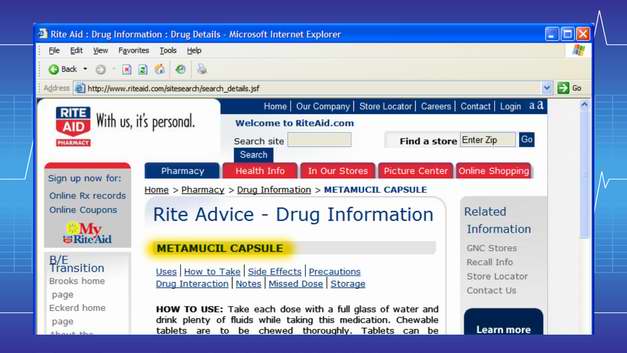
"Bloating, gas, and a feeling of fullness may occur. If these effects continue or become bothersome, inform your doctor. Notify your doctor if you experience: stomach cramps, nausea, vomiting, rectal bleeding, unrelieved constipation. If you notice other effects not listed above, contact your doctor or pharmacist."
That's a handful even for a prescription drug, but for a health food?
Some may argue:
— But Mr. Monastyrsky, these side effects don't apply to natural fiber in cereals, or fresh fruits and veggies...
Not so fast... If you recall, the Harvard's meta-analysis specifically noted that all fibers work exactly the same! In other words, what is true for psyllium, is also true for oats and all other kinds of soluble fibers.
So ask yourself:
— Is it worth reducing your cholesterol by the meaningless percent or two in exchange for potential “stomach cramps, nausea, vomiting, rectal bleeding and unrelieved constipation?”
I think not...
Alternatively, you may also take antibiotics to wipe out intestinal bacteria, so you can keep on having fiber. And many do just that, usually with a willing help from their doctors...
Unfortunately, the untimely death of your intestinal bacteria also causes diarrhea for some, constipation for others, as well as hair loss, uncontrollable bleedings, reduced immunity, and a host of other health problems related to dysbacteriosis — a medical term for this condition.
So ask yourself again:
— Is it worth going bald and becoming constipated over a daily bowl of oatmeal?
And that would be the least of your problems!
Quick Fix Or Big Mess? Mineral Deficiencies Increase The Risk Of Heart Disease
Think with me about it — what's is the therapeutic value of fiber if its digestive side effects rob your heart naked from the nutrients essential for its flawless functioning?
And not just your heart, but also your blood, and your lungs, and your arteries, and your brain... The whole body, literally...
When the Circulation journal published yet another study about fiber and cholesterol, this is what it said about fiber's effect on digestion:
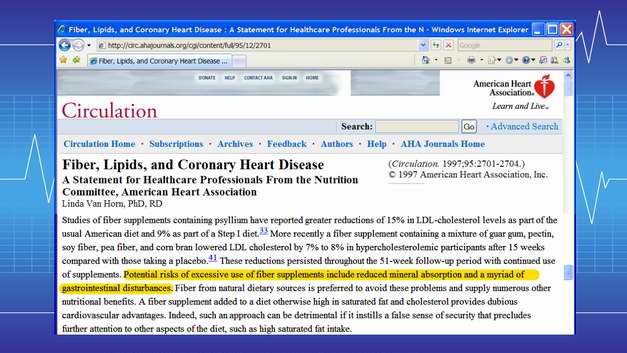
“Potential risks of excessive use of fiber supplements include reduced mineral absorption and a myriad of gastrointestinal disturbances.” [12]
Well, I'll leave it up to you to figure out what this “myriad of gastrointestinal disturbances” will do for you health, but here is what "reduced mineral absorption" means for your heart:
- Take essential calcium, magnesium, and potassium... Their deficiencies cause unstable blood pressure and arrhythmia, which, in turn, may cause congestive heart failure, ischemic heart attack, or sudden cardiac arrest.
- How about indispensible iron? It deficiency causes anemia, which leads to cardiomyopathy - a condition behind sudden cardiac arrest and near instant death;
- Or take chromium and vanadium... Their deficiency contributes to obesity and diabetes, which are the primary contributing factors to heart disease;
With these few, I've just scratched the surface. You can learn much more about mineral deficiencies effect on your health in any medical reference.
And, by the way, did you notice their choice of words to quantify "gastrointestinal disturbances" -- not several, not many, not numerous, but "a myriad."
There must have been an unusual amount of mayhem among the test subjects, if the editors of this academic journal let this completely unscientific language make its way into this article!
More To Fat Than Meets The Eye: Fiber Increases The Risk Of
Heart Disease By Blocking Fat-Soluble Vitamins
Would you agree with me, that getting your daily fix of essential vitamins is the whole rational for “healthy nutrition?”
Well, as strange as it may sound, fiber, particularly the soluble variety in oats and psyllium, prevents these vitamins from assimilating in the first place because it blocks the absorption of fat and bile in the intestines.
In clinical terms, this outcome is called fat malabsorption, and, this is, in fact, fiber's principal mechanism of action for reducing blood cholesterol.
Unfortunately, fat malabsorption also blocks the assimilation of fat-soluble vitamins A, D, E, and K. In this case, even supplements are useless, because the blocking mechanism is exactly the same as with food sources.
According to The Merck Manual of Diagnosis and Therapy, a deficiency of these vitamins may cause the following pathologies:
Lets start with Vitamin A:
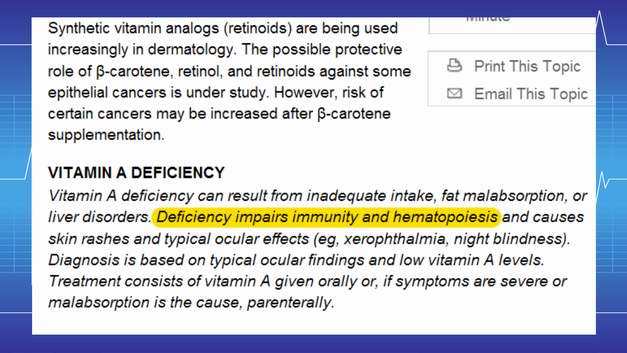
"Vitamin A deficiency can result from [...] fat malabsorption. Deficiency impairs immunity and hematopoiesis", which is the blood's ability to form new blood cells. [13]
I hope you don't need me to tell you that the impaired immunity and the failure to form new blood cells may kill you much, much sooner than high cholesterol...
Next, is vitamin D:
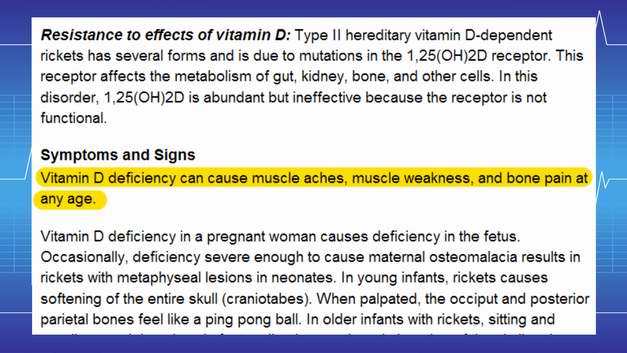
"[Fat] Malabsorption can deprive the body of dietary vitamin D... Vitamin D deficiency can cause muscle aches, muscle weakness, and bone pain at any age." [14]
Do you need me to remind you that your heart is made from muscle tissue too, and the same aches and weakness that may affect your feet or back, will affect your heart just as bad?...
I bet you can find a vitamin D deficiency in practically all of the 300,000 hearts which suddenly stop beating each year in the United States... [15, pdf]
The outcome of vitamin E deficiency is equally disturbing. According to Merk, it is:
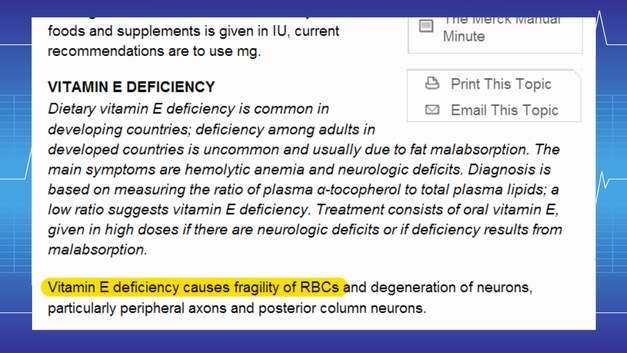
"Usually due to fat malabsorption... Vitamin E deficiency causes fragility of RBCs..." [16]
The RBCs is doctor-speak for red blood cells, the same cells that carry oxygen from your lungs to your heart, and from your heart to everywhere else... When red blood cells become fragile, the heart begins to work extra hard to pump oxygen until one day it simply stops beating because it doesn't have enough oxygen to feed even itself...
The last troublemaker is Vitamin K, and for exactly the same reasons: deficiency:
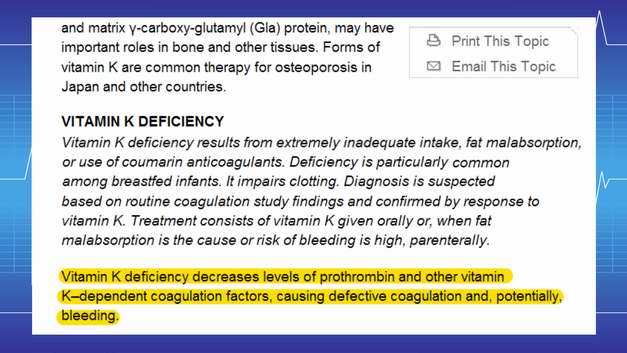
"Results from fat malabsorption [...] decreases levels of prothrombin and other vitamin K-dependent coagulation factors, causing defective coagulation and, potentially, bleeding." [17]
When all this happens, you heart may still be okay, but you may bleed to death from any internal bleeding, due to, for example tooth extraction, stomach ulcers, hemorrhoids, trauma from a fall or car accident, blood vessel rupture, or minor stroke...
Interestingly, long before my involvement in nutrition, my late mother, God bless her heart, almost died from unremitting blood loss after a trivial tooth extraction. For the next twenty-odd years we though she was hemophiliac, because every minor cut required a visit to emergency room to suture her wound in order to stop the bleeding.
Then, one day, not long after I got her off her beloved oatmeal and low fat diet, her blood coagulation problem had gone for good...
So don't tell me I didn't warn you... If you wish to see your grandkids getting married, stay current on your A, D, E and K..
No Free Lunch For Fiber: Fiber‘s Contribution To Obesity Increases The Risk Of Heart Disease
Besides all the other goodies, fiber is broadly promoted as a weight loss aid. In fact, the complete opposite is true:
- First, fiber expands your stomach's capacity, and makes it much harder to fill yourself to the point of satiety;
- Second, fiber extends the time it takes you to digest carbohydrates, which, in turn stimulates longer insulin secretion, and causes low blood sugar;
- Third, fiber interferes with the digestion of protein in your stomach, which, in turn, causes hunger pains.
These three factors - a cavernous, distended stomach, low-blood sugar, and hunger pains are the primary drivers of the ravenous, round-the-clock appetite, and ensuing weight gain. But that's only half-the-truth. The other half is fiber's considerable caloric content. You've probably heard the oft-repeated statement that fiber has "zero net carbs," meaning it's a calorie-free, guilt-free product, just like on this web page:
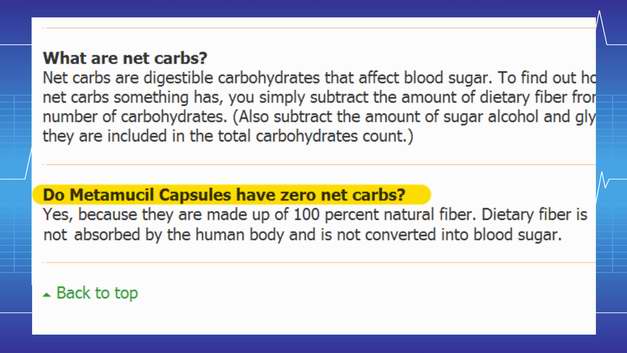
— Question: Do Metamucil Capsules have zero net carbs?
— Answer: Yes, because they are made up of 100% natural fiber. Dietary fiber is not absorbed by the human body and is not converted into blood sugar.
Actually, this is a well-practiced lie.
According to the Dietary Reference Intakes manual - the nutritional bible from the National Academies Press that no legitimate dietitian or nutritionist goes without a copy of - fiber provides digestible calories just like any other food:
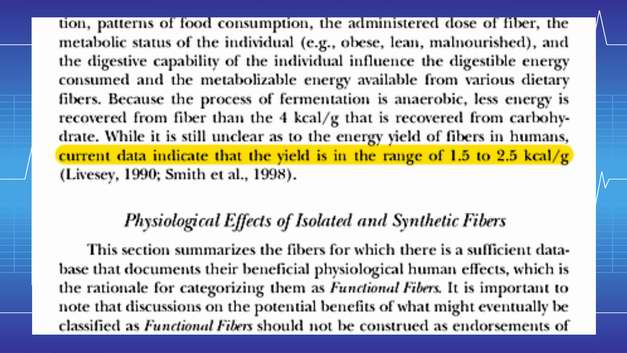
"Current data indicate that the [energy] yield [of fiber] is in the range of 1.5 to 2.5" calories per gram of consumed fiber. [18]
If you aren't starving - and how can you be when your day starts with three servings of oatmeal - your liver turns these extra calories from fiber into body fat.
Granted, a few grams of fat there, a few grams here, may not seem like a big deal. But, still, if you are consuming thirty to forty grams of fiber daily in addition to all other carbs, eventually it all adds up to extra body fat, prediabetes, and, finally, diabetes.
I don't have to tell you again and again that that a free lunch exists only in deceptive advertising, and that nothing brings on heart disease with as much vengeance as these three omnipresent conditions.
Fiber's Epitaph: If it sounds too good to be true, it means some one is peddling you junk
Junk food, junk science - it's all the same. Take any junk, repackage it into health food, legitimize it with junk science, mark it up to make a killing, sell it to unsuspecting health-concerned customers, laugh all the way to the bank, and let someone else clean up the mess...
This means we are ready to summarize our findings:
- First, as any cardiologist will tell you, cholesterol-lowering drugs claim to reduce the risk of heart attack only by about 30%... To accomplish even this partial reduction of risk requires the lowering of total cholesterol by twenty, thirty, or more percent, all the way down to two hundred, not just a statistically-insignificant 1.7%, or just five milligram per deciliter as fiber does.
- Second, low-fat diets recommended for cholesterol reduction with fiber actually increase your risk of heart disease because they reduce the protective properties of HDL cholesterol.
- Third, fiber from food or supplements without a restrictive low-fat diet has zero effect on your level of cholesterol. As the American Heart Association noted, “A fiber supplement added to a diet otherwise high in saturated fat and cholesterol provides dubious cardiovascular advantages.” [19]
- Fourth, natural fiber in fruits, vegetables, and cereals is always accompanied by dietary carbohydrates, usually five to ten times as many. If you attempt to consume the recommended thirty five grams of natural fiber daily, you will ingest alongside between one hundred and fifty to three hundred grams of extra carbohydrates.
- Fifth, excess carbohydrates in a fiber-rich diet are the primary cause of metabolic syndrome, obesity, prediabetes, and diabetes. All four conditions are known as the major causes of heart disease.
- Sixth, natural and supplemental fiber reduces the absorption of essential fat-soluble vitamins A, D, E and K, and minerals, such as iron, calcium and magnesium. These vitamins and minerals regulate blood, heart, and lung functions, and their deficiencies may cause death long before heart disease.
- Finally, seventh, I hope you noticed that the actual effect of fiber on heart disease was never studied. All this talk about fiber's benefits for the heart is simply marketing and money-making ploy made from fiber's non-existent "ability" to lower cholesterol in connection with a low-fat, low-cholesterol diet that lowers it anyway without any fiber...
All of these conclusions sum up to one sad result: Anyone hoping that the soluble fiber in oats or psyllium will protect their heart, extend their life, and enhance their health is very much mistaken because, in reality, this fiber is doing the complete opposite.
I hope this isn't you!
Part 3. One last question
Mr. Monastyrsky, so what can I do to lower my cholesterol and reduce my risk of heart disease?
Well, a complete answer to this question will require a season-long mini-series, and, then, some... So lets be practical, and concentrate on the fiber-related aspects of this quagmire:
- First, visit FiberMenace.com/heart web page to explore the background information I relied upon while preparing this investigative report. Use this information to rebuff the intense pressure to rely on fiber emanating from your physicians, partners, parents, and peers.
- Second, forward this report to your doctors, nutritionists, and dietitians. A great deal of intentional disinformation about fiber and heart disease is specifically targeted at medical professionals because of their considerable sway with patients and the general public. I don't need to tell you that bad medical advice is even more dangerous than the heart disease itself, and I know of only one reliable antidote -- true facts, plain and simple.
- Third, fiber is bad for healthy adults, but it's absolutely devastating for kids and murderous for less than well seniors. In my forensic research I identified fiber as a primary cause of autism and juvenile diabetes. You can learn more about fiber's dirty hand in the raging epidemics of juvenile diabetes and autism from the Fiber: Wonder Food or Wrecking Ball? page on my web site.
- Fourth, drop from your diet all food and supplements with processed fiber, particularly fiber-fortified cereals and laxatives... This will have an immediate and positive effect on your heart and overall health, because you'll improve the assimilation of essential fatty acids, proteins, vitamins, minerals, and microelements, including those I mentioned earlier in this report. And, by the way, I am not against natural fiber in fresh fruits and veggies. In moderation, it is perfectly acceptable for healthy, normal weight children and adults. Again, the key words are: healthy, normal weight, and moderation. If anyone tells you, that my advice is extreme, it's a lie...
- Fifth, reduce carbohydrates in your diet to under 6 oz or 180 grams... This will quickly normalize your levels of blood sugar, insulin, and triglycerides. In turn, this will reduce your blood pressure, improve your circulation, and decrease your heart's, lungs', and kidneys' workload. You will also stop gaining weight because, on average, carbs above 6 oz exceed your daily energy needs, and are turned into body fat...
- Six, while reducing fiber and carbs, you may experience constipation and low-blood sugar. These two problems are well familiar to anyone who failed the Atkins-style diets. I explain how to — overcome these side effects in the Atkins Goes To South Beach chapter of Fiber Menace. To wean yourself off fiber dependence, read the Overcoming Fiber Dependence essay. Both are free to read on my web site.
Seventh, strive not to gain any more weight, because the more weight you have to carry around, the more wear-and-tear is placed on your heart, lungs, and kidneys. Interestingly, once you learn to attain metabolic balance by getting rid of fiber and reducing carbohydrates, you may start losing weight naturally.
Passport pictures don't lie: this is me on high-fiber vegetarian diet around 180 lb at age forty two. Today, at fifty four, I am thirty pounds lighter. If I could do it, so can you!
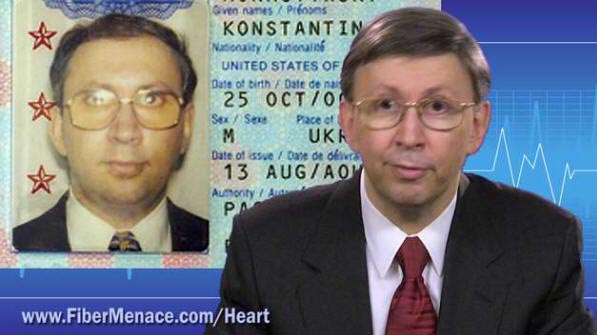
Author's note: I don't look as goofy on video as in this picture. Alas, it was the best frame with my lips closed that I could extract. As you can see, the difference between September 2008 (size 32, two months shy of 54) and August of 1997 (size 42, age 42) is absolutely striking.
Eight, as you age, your cholesterol goes up naturally, and reaches around 280 mg per deciliter for 95th percentile of healthy people by the time they reach fifty... In essence, if you believe the Big Pharma propaganda about cholesterol's role in heart disease, all healthy middle-aged adults must take statins.
That brings huge profits to them, but very little health to you. According to all of the available clinical research in support of statins, they reduce the relative risk of heart attack by less than 3% compared to a sugar pill. But at the same time, they endanger your life so much, you must take a precautionary blood test every three months to prevent liver failure.
Author's note: Statins claim ~30% risk reduction of heart attacks. This deception is based on comparing the meaningless absolute outcomes of cherry-picked clinical studies paid for by Big Pharma instead of the true and objective relative results. More on this coming soon. Please register to get notified.
The second most prominent side effect of statins is called fibromyalgia. It damages muscle tissue, including, of course, heart muscle. Lo and behold, around 300,000 Americans die annually from a sudden cardiac arrest, many of them were taking statins. Considering the heart's anatomy and physiology, guess what condition was behind most of those sudden deaths?
Author's note: Fibromyalgiais an early warning sign of rhabdomyolysis — the breakdown of muscle fibers resulting in the release of myoglobin into the bloodstream. The outcome is usually lethal.
So ask yourself - does it make any sense to play Russian roulette with liver failure or cardiac arrest for an illusory chance of reducing atherosclerosis by a percent or two?
- Ninth, along with fiber came another health threat - overconsumption of water, because without glasses and glasses of water, supplemental fiber may obstruct your esophagus or get stuck inside your stomach and intestines. Unfortunately, excess water also leaches out essential minerals from your bones just as hard as fiber prevents them from assimilating. This double jeopardy is described in the Water Damage chapter of Fiber Menace.
- Tenth, read and recommend my book and its companion web site FiberMenace.com. Both contain a great deal of additional information about other perils of dietary fiber, including its role in constipation, hemorrhoids, irritable bowel syndrome, diverticular disease, ulcerative colitis, Crohn's disease, colon cancer, and fifty plus other disorders.
- Eleventh, please embed (see below) this video into your blog, web site, or social network page, and e-mail the link to this report to the people you love and respect. There isn't a greater way to show you affection and respect, than to share with them this life- and health-saving information.
- Finally, register your e-mail on my web site, so I can let you know about the releases of my new investigative reports. I promise you that they will be as shocking, informative, and essential for your health and longevity as this one!
Again, thank you for watching!
Take good care of yourself!
God bless you and your family!
Footnotes
1 Metamucil: Top 10 Reasons to love Metamucil;[link]
2 Cholesterol-lowering effects of dietary fiber: a meta-analysis1,2; The American Journal of Clinical Nutrition; [link]
3 Metamucil: Top 10 Reasons to love Metamucil;[link]
4 Food Labeling: Health Claims; Soluble Fiber From Whole Oats and Risk of Coronary Heart Disease; Food and Drug Administration, HHS; [link]
5 Food Labeling: Health Claims; Soluble Fiber From Certain Foods and Coronary Heart Disease; Food and Drug Administration, HHS; [link]
6 Fiber, Lipids, and Coronary Heart Disease; A Statement for Healthcare Professionals From the Nutrition Committee, American Heart Association; Linda Van Horn, PhD, RD [link]
7 Step I , Step II and TLC Diets; American Heart Association; [link]
8 Dietary intake and changes in lipoprotein lipids in obese, postmenopausal women placed on an American Heart Association Step 1 diet; [link]
9 Problem with American Heart Association "Step 1" diet; From the Townsend Letter for Doctors & Patients [link]
10 PLOS Medicine: Eight Americas: Investigating Mortality Disparities across Races, Counties, and Race-Counties in the United States; September 12, 2006; [link]
11 Life Expectancy Drops for Some U.S. Women; David Brown; Washington Post Staff Writer; Tuesday, April 22, 2008 [link]
12 Fiber, Lipids, and Coronary Heart Disease; A Statement for Healthcare Professionals From the Nutrition Committee, American Heart Association; Linda Van Horn, PhD, RD [link]
13 Vitamin A - Nutritional Disorders; Merck Manuals Professional Edition; [link]
14 Vitamin D - Nutritional Disorders; Merck Manuals Professional Edition; [link]
15 Sudden Deaths From Cardiac Arrest — Statistics; American Heart Association [link]
16 Vitamin E - Nutritional Disorders; Merck Manuals Professional Edition; [link]
17 Vitamin K - Nutritional Disorders; Merck Manuals Professional Edition; [link]
18 Dietary Reference Intakes for Energy, Carbohydrate, Fiber, Fat, Fatty Acids, Cholesterol, Protein, and Amino Acids (Macronutrients) (2005); Chapter: 7 Dietary, Functional, and Total Fiber; The National Academies Press[link]
19Fiber, Lipids, and Coronary Heart Disease; A Statement for Healthcare Professionals From the Nutrition Committee, American Heart Association; Linda Van Horn, PhD, RD; [link]