
Irritable bowel syndrome
This guide debunks the universally accepted view that the causes of irritable bowel syndrome are unknown, describes them one by one, and explains how to eliminate each one safely and permanently. This information is vital for persons in the high-risk group for ulcerative colitis, Crohn's disease, and colon cancer because the IBS's conventional diagnostic and treatment raise these risks considerably.
According to the 2007 edition of the world's leading medical reference — The Merck Manual of Diagnosis and Therapy— the causes of irritable bowel syndrome is still unknown, as you can see from this illustration (modified to fit this page, click the picture to view actual page):
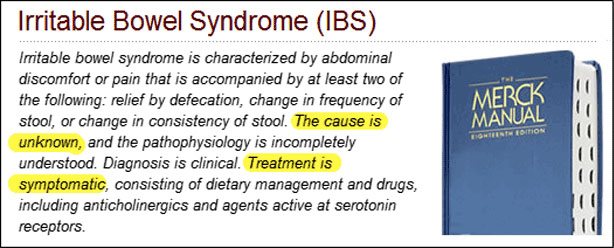
Though it's hard to accept that in the era of routine heart transplantation, IBS's causes are still a mystery(1), it's even harder to stomach that the recommended treatment makes IBS worse. "Patients with IBS may subsequently develop additional GI disorders," — says the Merck Manual.
By "additional," they mean inflammatory bowel disease (IBD) — the progenitor of ulcerative colitis and Crohn's disease. In these cases, close to half of all patients need a colectomy — the large intestine's surgical removal. It is the only way to stop these patients from bleeding to death.
Even when patients do get spared these uncontrollable bleedings with aggressive medical therapies(2), such as immunodepressants, antibiotics, and steroids, these nasty IBDs increase the risk of colon cancer up to thirty-two times (3,200%).
Patients are commonly recommended a prophylactic colectomy "just in case." Most choose the bag when choosing between an almost certain death from cancer and an undergarment colostomy bag.
Live by the book, die by the book, literally!
The Merck Manual represents what's known as "standards of care." In turn, these standards are scrupulously followed by doctors who wish to deliver "the best possible care" to their patients. The problem is — when a standard is wrong, as is the case with IBS, the best possible care invariably turns into the worst possible nightmare.
If you happen to have IBS and are uninsured or have limited access to medical care, you are safer and better off untreated than those well insured and, presumably, more fortunate, who will be on the receiving end of the Merck-recommended treatment:
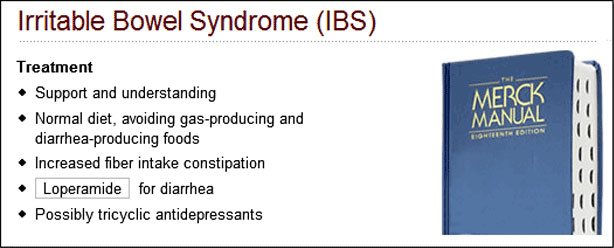
I realize you may find this information disturbing, but, so far, unsubstantiated. So let's begin by deconstructing this doctor-speak with surprisingly bad grammar into plain English (3):
Q. What has “support and understanding” to do with bowel disease?
According to the Merck Manual, IBS is a partially "psychosocial" condition. It means that patients with IBS are psychotic individuals whose own mental attitudes contribute to intermittent constipation, diarrhea, and abdominal pain.
It is junk science at its worse — irritable bowel syndrome is a 100% physiological condition, not psychosocial. If anything, the constant pain, suffering, and poor treatment may turn IBS victims into psychotic wrecks, but not the other way around.
Stress indeed plays a role in IBS unfolding (as well as in practically all other human ills), but not in ways that can be effectively treated by psychological (hypnosis, counseling) or psychiatric (prescription drugs) intervention. You can learn more about the role of stress in IBS and how to counteract its impact on digestive disorders here.
Q. What does “normal diet, avoiding gas-producing and diarrhea-producing foods” mean?
The primary “gas-producing” foods are indigestible carbohydrates, that get fermented in the large intestine by innate, beneficial, and essential gut bacteria (microflora). Two of the most prominent indigestible carbohydrates are dietary fiber and lactose (milk sugar) [link].
The primary “diarrhea-producing” foods are sugar alcohols, such as sorbitol, found in bananas and prunes; soluble fiber, such as pectin found in apples and oranges; beta-D-glucan found in oats, numerous unnamed polysaccharides found in most plants and psyllium laxatives; and fiber fillers and stabilizers found in practically all processed food, such as guar gum, carrageen, cellulose gum, inulin, and numerous others [link].
In essence, this advice means to avoid the following: dairy because of lactose and fiber stabilizers (yogurt, ice cream, sour cream, cream cheese); fruits rich in pectin (oranges, apples); fruits rich in sugar alcohols (bananas, prunes, prune juice), and food rich in fiber (oatmeal, morning cereals, bran, whole wheat bread, pasta), fiber laxatives; and all processed food with fiber additives.
This is good and easy advice to follow until you consider their next recommendation...
Q. How come they recommend “Increased fiber intake for constipation” if fiber is a well-known gas- and diarrhea-producing substance?
To me, that‘s either the biggest “medical mystery”, or the biggest “medical idiocy,” or simply outrageous negligence, or, perhaps, all of the above. In fact, to unravel this mind-boggling incongruity for myself and others, I wrote a book entitled “Fiber Menace: The Truth About the Leading Role of Fiber in Diet Failure, Constipation, Hemorrhoids, Irritable Bowel Syndrome, Ulcerative Colitis, Crohn's Disease, and Colon Cancer”, and you are welcome to read it.
If you are a skeptical medical professional reading this, and, all things considered, I don‘t blame you a bit for being skeptical, consider the following two quotes from the American College of Gastroenterology Functional Gastrointestinal Disorders Task Force [link]:
“Fiber doesn't relieve chronic constipation and all legitimate clinical trials demonstrated no improvement in stool frequency or consistency when compared with placebo.”
“In the management of IBS, psyllium is similar to placebo. In fact, the bloating associated with psyllium use will likely worsen symptoms in an IBS patient.”
Psyllium is a source of soluble and insoluble fibers found in Metamucil-type laxatives, and their digestive properties are identical to all other types of fiber.
Q. Will Loperamide (Imodium) enable IBS recovery?
No, it will not. It may temporarily stop diarrhea by literally paralyzing your intestines, but only to cause severe constipation, because, along with “dizziness, drowsiness, [and] tiredness”, constipation is the most immediate and prominent side effect of Imodium.
Of course, for me — a former pharmacist — there is no surprise here. Imodium is a synthetic opioid (opium-like drug). Just like all opioids, it “kills” the contraction of circular and longitudinal smooth muscles, which line up the stomach, esophagus, intestines, bowel, and major blood vessels. This effectively stops the propulsion of food and feces throughout the entire digestive tract, and, in turn, causes more constipation, more indigestion, more bloating, more flatulence, and stronger cramps.
Just like all opioids, Imodium diminishes blood circulation and oxygen delivery to the brain. This causes dizziness, drowsiness, and tiredness — depression-like symptoms.
Q. Would “tricyclic antidepressants” help my depression and IBS?
Well, since your doctor may think that you are affected by IBS because you are psychotic, and you are miserable from incessant abdominal pain caused by more fiber, and you are depressed from Imodium, these potent antidepressant drugs may indeed keep you away from the psychiatric ward.
Funnily enough, constipation is one of tricyclics‘ most common side effects along with more drowsiness, dizziness, fatigue, and muscle and joint aches. So you quickly return to your doctor for even more support and understanding, more fiber to relieve constipation, more painkillers, more Imodium, and even more antidepressants.
Q. Why does the conventional diagnosis of IBS increase the risk of colon cancer?
Not just the colon, but any cancer! A visual examination of the large intestine (i.e. colonoscopy) requires a bowel prep — a thorough cleansing with synthetic laxatives. This procedure damages intestinal flora, disrupts stools, makes resuming normal bowel movements difficult, and may cause intestinal inflammation — the precursor of colorectal polyps and cancers.
In addition to all of the side effects from a bowel prep for a conventional colonoscopy, a single virtual colonoscopy (CT scan) exposes patients to radiation 2,000 to 3,000 times more potent than a single dental X-ray. This dose of radiation, according to the Federal Drugs Administration [link], increases a person's lifetime risk of any cancer to 20%, or one chance in five.
With minor variations, these ineffective and risky diagnostic and treatment guidelines are repeated in endless medical textbooks, references, how-to books, and health-related web sites. Not surprisingly, according to the International Foundation for Functional Gastrointestinal Disorders, ”irritable bowel syndrome (IBS) affects approximately 10-20% [30 to 60 million – ed.] of the general population.” Let's hope you aren't one of them, and if you are — let's get you out of this tangle before it's too late.
***
At this juncture, you have three choices: (1) Do nothing, and get by with this or that irritating your gut for the rest of your life; (2) Continue with the conventional treatment I just described above, and face the music; or (3) Study this page, follow its recommendations, and recover from IBS.
“Recover” doesn‘t mean that you‘ll be able to eat and drink with reckless abandon just like your happy-go-lucky buddies. Unfortunately, you won‘t and you can‘t because an extended history of IBS and, particularly, its conventional treatment causes damage that isn‘t completely reversible. So if eating and drinking with reckless abandon are your objectives, don‘t bother reading this any further — alas, I am not a magician.
But if you are a realist, then to “recover” means that by following my recommendations: (1) you‘ll be free from abdominal pain and discomfort associated with IBS; (2) you‘ll be able to attain normal stools without laxatives in case of constipation, or fiber and medication in case of diarrhea; (3) you‘ll boost your immune system, energy, stamina, and overall health, and (4) you‘ll significantly reduce your chances of getting colorectal cancer.
Depending on your age and overall health, you may also enjoy several unexpected benefits:
- Improved quality of life. Your energy levels and stamina may increase substantially, particularly from the elimination of pain-relievers, antibiotics, antidepressants, laxatives, and anti-diarrheal drugs. Most of these medicines are systemic, which means they affect your body and mind just as strongly as your bowels.
- Healthier children. If you have young children, you own positive experience will teach you and them the habits of colorectal health (gut sense), and they will grow up healthier, stronger, and well prepared for today‘s demanding and competitive world.
- Higher income. Your work performance and career will enjoy a considerable boost because it‘s next to impossible to be productive, efficient, and sociable while suffering from insomnia, or experiencing day-long abdominal discomfort and flatus, or being affected by mind-altering drugs.
- Reproductive health. If you are a woman, you may find relief from PMS — an oftentimes IBS-related condition. If you can‘t conceive a child without any organic cause, or have been experiencing spontaneous miscarriages, you may be able to overcome these two devastating problems as well.
- Better sex life. If you are sexually active, your sex life will improve dramatically, because you‘ll be free of bloating, flatulence, and abdominal pain, which are particularly bothersome during intercourse. You‘ll also experience stronger orgasms because you‘ll be sufficiently relaxed to enjoy them without fearing embarrassing flatus (gases).
- Significant savings. You‘ll be able to save a bundle of money related to the treatment of IBS-related symptoms and side effects, such as constipation, diarrhea, hemorrhoids, diverticular disease, and numerous others.
- Reduced cancer risk. Finally, you are less likely to succumb to colorectal cancer — the second leading cause of cancer-related deaths in the United States. This is particularly important for high-risk individuals for colorectal cancers. And with fewer x-rays and drugs — the same applies to all other cancers.
With all these prudent goals in mind, here are the detailed stage-by-stage descriptions of IBS causes, followed by step-by-step recovery guidelines. It will take you less time to study this page than a single visit to a GI specialist. Besides, this information is free to read, safe to use, and tons more effective.
I've suffered for 10-12 years with IBS, and I've followed all the advice given to no avail. You know the advice. Fiber, fiber, fiber and little or no fat. I've written a novel, and in order to market it, I will have to hold book signings. This was a terrifying thought, considering I would go from constipation to "sudden" severe diarrhea. Never knowing when it might strike.
In desperation, I searched the web — again — for an answer, and stumbled upon your website. I'm not doing the victory dance quite yet. But for about three months, I've been eating a normal diet. Moderate fiber, moderate fat, two meals a day. (I'm eating like I did before this happened - which by the way, I think was brought on by a weight loss diet that pushed high fiber, low fat. I ate fiber 5-6 times a day). And from week one I've improved to the point where my system is operating in a nearly normal way. Long story short (too late) I can't thank you enough!" L.W.W., USA (via e-mail)
The Causes of
Irritable Bowel Syndrome
The following stage-by-stage narrative deconstructs the etiology and unfolding of irritable bowel syndrome. Once IBS is no longer a mystery, you'll have more confidence and motivation to proceed toward your complete recovery and avoid the relapse.
You may not experience some of the symptoms and/or stages described below, but, with minor variations, this is the most common scenario:
Stage 1. Loss of intestinal flora
The loss of indigenous (innate) intestinal flora (bacteria) precedes IBS, and is, in general terms, its initial and primary cause. All the other problems (and causes) get layered in the stages that follow.
Intestinal bacteria are an essential component of normal colon ecology. They form stools, protect the intestinal membrane from bacterial and viral pathogens, govern the primary immune response (phagocytosis), and produce a range of micronutrients, essential for health and longevity.
The two best known byproducts of intestinal flora biosynthesis are vitamin K (responsible for blood coagulation) and biotin (vitamin B-7). Vitamin K deficiency is behind internal bleedings, pernicious anemia, inoperable ulcers, and strokes. Biotin deficiency is behind hair loss, connective tissue disorders (i.e., dermatitis, osteoarthritis, weak nails), and diabetes.
The typical “killers” and causes of intestinal bacteria are all well known. These are ubiquitous antibacterial medicines and compounds (antibiotics and synthetic agents, such as isoniazid, sulfonamide, methenamine, rifampin, hexachlorophene, etc.); antibiotic-laced meat and diary; dental amalgams (black fillings); mercury in fish and seafood; chlorine, arsenic, and lead in drinking water; lead in paint and environment; silverware, common laxatives, food colorings, artificial sweeteners, infectious diseases, intestinal inflammations, colonoscopies, x-rays, radiation, chemo treatments, and numerous others.
Any one of the above factors may lead to partial or complete evisceration of intestinal bacteria, a pathology known as dysbacteriosis (dysbiosis). In turn, dysbacteriosis results in hard stools, either small or large. These two conditions — dysbacteriosis and hard stools precipitate irritable bowel syndrome. Enters Stage 2.
Stage 2. Hard stools
Bacteria are single-cell microorganisms. Just like all cells in nature, they hold water and hold it tight. Intestinal mucus binds these “wet” bacteria with dry inorganic food remnants into moist, soft, and pliable stools. But without bacteria, stools become small, dry, and hard. The transformation of succulent grapes into weathered raisins is a telling analogy:

The raisin-like small stools are a problem because the large intestine wasn't designed to move around small objects, so they get stuck — as in constipation. Unlike raisins, though, small stools dry up even more and become as hard as pebbles.
The pebble-like stools are an even bigger problem because your anus isn't made of steel but of a delicate and sensitive tissue — similar to the inside lining of your nose. Thus the human anus wasn't meant for passing “pebbles” through any more than your teeth were meant for opening beer bottles (even though some of you probably can...)
If you are affected by dysbacteriosis, and your diet is low in fiber, then the hardened stools remain small and dry. If fiber is present, then the hard stools are larger because fiber adds bulk.
You may experience hard stools and remain regular nevertheless because you are an “expert” strainer, or can tolerate pain better than others, or the degree of hardness is still tolerable, or all of the above.
Stage 3: IBS-related constipation
Constipation means irregular stools. A person is considered “officially” constipated when bowel movements are absent over three days. Diagnosing constipation is like reporting a missing person—don't bother calling the police until 24 hours have passed. Ditto, don't bother calling your doctor until three days have passed. If it's only 2.5 days—sorry, you are still "fine!"
For this reason I prefer using the terms impacted stools, hard stools, or costivity—slow in moving hard stools — instead of constipation, which refers to not having stools over three days. This way it's easier to convince people who pass hard stools in “under three days,” (i.e., who are still technically regular) to seek treatment.
Hard stools, costivity, and constipation are commonly reported by people trying out low-fiber diets, such as Atkins‘. It isn't the diet‘s fault that people run into these problems, but having fiber-dependence before commencing the diet.
If you consume plentiful fiber or fiber laxatives, stool hardness may be less apparent. That's, incidentally, why fiber is recommended in the first place. As in the next stage, of course.
Stage 4. Treatment of constipation with fiber
Medical professionals and Dr. Moms alike recommend dietary fiber and fiber laxatives to “naturally” alleviate hardness, particularly when stools are small and dry. Fiber bulks up (enlarges) and moisturizes stools by either retaining water, blocking water absorption, or both.
The most apparent damage from the fiber in enlarged stools is mechanical, related to its sheer physical bulk. Fiber is the only commonly consumed nutrient that reaches the large intestine undigested and expanded up to five times (500%) its original weight. On the other hand, proteins, carbohydrates, and fats leave behind less than 5% of undigested solids.
Here is the same math in weight units: once in the colon, 100 g of fiber turns into 500 g of undigested residue, while 100 g of proteins, fats, and carbohydrates digest down to less than 5 g of solids. Thus, per unit of weight, undigested fiber is 100 times denser than all other nutrients (500 g / 5 g = 100 ). That's why doctors refer to a fiber-free diet as low density and a high-fiber—as a high bulk diet or roughage.
Historically, indigenous diets, even plant-based, were low-density. That‘s because prehistoric people didn't have the means and skills to grow, process, and prepare high-fiber food. For these evolutionary reasons, human digestive organs haven‘t adapted to high-bulk diets, and remain as vulnerable today as they did millennia ago.
Unfortunately, enlarged stools require straining, particularly as you get older. Welcome to Stage 5.
Stage 5. The hallmark of IBS: Straining
Younger people can expel large stools without apparent difficulties because they still have much better control of pelvic and abdominal muscles, stronger intestinal peristalsis, and less resistance from internal hemorrhoids.
Normal defecation requires just as much effort as urination—zero. If straining is necessary, however moderate, it means that the size of stools exceeds the optimal spread of the anal canal.
The anal canal aperture maxes out at 35 mm or 1.4". For normal, notice-free passing, soft and moist stools shouldn‘t be much wider than one‘s index finger or a nickel (21 mm, U.S. currency 5 ¢ coin), and correspondingly smaller in children.
If you need convincing that your anal canal is that narrow, you can perform a digital rectal self-exam. No, you don't need a computer. Just lubricate your pointing finger with petroleum jelly, and slowly insert it into the anus. You will immediately realize just how tight and narrow it is. (This test is called a digital test because “finger” in Latin is “digit.”)
Straining applies strong force by abdominal and pelvic muscles on the colon and rectum to squeeze out stools — just like you would squeeze out the last bit of toothpaste from a spent tube below:
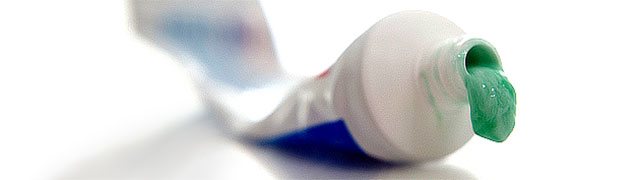
Yes, that's pretty much what happens to the colon and rectum when you strain extra hard. The damage isn't far behind: internal and external hemorrhoidal disease, loss of urge sensation because of anal nerve damage, stubborn anal fissures (skin tears inside anal canal) that won‘t heal, loss of muscle tone and ensuing “lazy gut” syndrome, rectal prolapse, rectocele (rectal wall prolapse into the vagina), diverticular disease, usually lethal colon perforation, and others.
Also, straining wrecks havoc “above and beyond” the colon and rectum—strong abdominal pressure affects all organs situated in the lower abdominal and pelvic cavity: the rest of the colon, small intestine, uterus, bladder, and others.
This damage may manifest itself as obstruction of the small intestine, reflux of fecal matter back into the small intestine, abdominal and inguinal (men‘s) hernias, pelvic cramps, spontaneous abortion (miscarriage), vaginal bleeding, symptoms of PMS, the blockage of fallopian tubes, and other mechanical damage of internal organs.
Straining may also temporarily constrict major blood vessels and cause blood clotting. Stray clots may cause pulmonary embolism, heart attack, or stroke. Elevated blood pressure related to straining may cause cardiac arrest, aortic rupture, internal hemorrhages, strokes, heart attacks, and other major cardiovascular calamities. Even the eyes aren't spared from vessel rupture and related retinal and macular damage.
The vascular problems are made worse by poor blood coagulation—dysbacteriosis results in an acute deficiency of vitamin K—a clotting factor. Normally, vitamin K is synthesized by intestinal bacteria.
Women are expert strainers because they have far greater voluntary control of pelvic muscles than men. In some respects, straining is similar to what's happening during natural childbirth. Not surprisingly, women are affected by major colorectal disorders — particularly hemorrhoidal and diverticular diseases — more often than men.
On the other hand, men have stronger abdominal muscles and are more likely to develop abdominal wall or inguinal (groin) hernias. If you look at weightlifters pumping heavy iron, their facial expressions and grunts aren't that different from guys having a hard time in the loo. But unlike an average Joe in the john, weightlifters wear abdominal binders and groin trusses to prevent herniation. (This may be a good gift idea for the ‘constipated man’ in your life.)
Even children aren't spared from the aftermath of straining—nowadays, hemorrhoids are becoming commonplace even among preschoolers. Just ask any pediatric gastroenterologist.
As you can see, there are plenty of reasons not to strain and even more reasons not to encourage children to strain. Otherwise, it's a straight path to hemorrhoidal disease.
Stage 6. The inevitable side effect of IBS: Internal hemorrhoids
Hard stools and straining, even moderate, cause the gradual enlargement of internal hemorrhoids. That‘s due to the pressure applied by passing stools on the inner walls of the anal canal inside and abdominal and pelvic muscles from the outside.
Internal hemorrhoids aren‘t a “disease,” but a part of the anal canal anatomy—small collagenous pads that cushion passing stools. Their enlargement is akin to calluses on your palms from shoveling snow. According to the experts, by age 50, most adults have asymptomatic enlarged internal hemorrhoids without realizing it.
External hemorrhoids are dilated, varicose veins of the hemorrhoidal plexus. The thrombosis of external hemorrhoids causes swelling and severe pain but rarely bleeding. They do not affect defecation per se but may cause stool withholding and incomplete emptying because of fear of pain and bleeding.
Anal intercourse damages the anal canal similarly to hard stools and straining, only in reverse. Lubrication may help protect the anal canal from laceration, but not from the enlargement of internal hemorrhoids, nerve damage, and muscle tone loss in anal sphincters. Because of the latter, anal intercourse is more likely to lead to fecal incontinence than constipation. This fact is well known to gastroenterologists, who specialize in anorectal restorative surgeries for men and women who engage in anal intercourse.
(Yes, I realize that some penile implements are wider than 1.4” (35 ml), and have a hard time explaining how it's possible to insert them into the anus. But, then, I tell myself—if some people can swallow swords and others can swallow fists, then, with practice, patience, and disregard for common sense, everything is possible.)
The very first symptoms of anal canal damage are pain and bleeding. “Welcome” to the next stage!
Stage 7. Hemorrhoid-related pain and bleeding
The enlargement of internal hemorrhoids from straining leads to further constriction of an already narrow anal canal. While passing through a constrained anal canal, hard stools lacerate its delicate skin. Laceration causes bleeding or streaking of stools with bright red blood.
Anal pain may differ in intensity, depending on the degree of nerve damage. Older adults and diabetics may no longer feel any pain because the nerve damage is complete. But when it isn't, the anal plexus region is quite sensitive, and the pain, even from slight pressure, may be quite sharp.
Seeing blood and experiencing pain brings about the next problem—the sometimes conscious, sometimes unconscious decision to withhold stools to avoid or prevent an unpleasant experience. It causes an incomplete emptying of the bowels and is particularly common among toddlers, who can tolerate pain the least.
Stage 8. The hallmark of IBS: Incomplete emptying
An average adult's large intestine is 4.5 feet (1.5 m) long and can accumulate a significant volume of feces. Many people routinely retain 5-10 or more lbs of impacted stools without realizing it because of incomplete emptying.
If a person isn't overweight, an experienced physician may detect retained stools during a manual exam of the lower abdomen. Because minerals aren't 100% transparent to the imaging source, retained stools can be seen with various degrees of clarity on imaging scans, such as x-ray, ultrasound, computed tomography, and MRI.
A person on a fiber-free diet can go without a single bowel movement for a month or longer and not experience any noticeable side effects. With just 100 to 200 grams of stool generated daily under these conditions, the large intestine has enough holding capacity to accumulate several weeks' worth of stools after they dry up.
When the colon is finally filled up, retained stools are pushed down and out into the rectum, where they may stimulate painful defecation. This way, more room is freed on top for the newer feces to pile up and repeat this cycle again and again.
When defecation is no longer attainable, the situation is called fecal impaction. In this case, there are four possible outcomes, and none of them good: (1) elective manual disimpaction or surgery; (2) colon perforation; (3) fecal reflux (feces flow back into the small intestine; (4) intestinal obstruction and ensuing necrosis.
Okay, enough scarecrows. Normally, the large intestine should contain well under 2 lb (1 kg) of retained feces, or two to three days' worth. A healthy stool shouldn‘t exceed 100-120 grams per bowel movement*, usually twice daily.
People on high-fiber diets expel on average 300 to 500 g per bowel movement*, usually once daily. Longer intervals between bowel movements increase total stool weight, but not linearly, because of stools' drying out. (*Source: R.F. Schmidt, G. Thews; Human Physiology, 2nd edition. 29.7.)
As incomplete emptying progresses, retained stools compress, enlarge, harden up, dry out, and let newer feces pile up on top to do the same. Incomplete emptying results in impacted stools, described in the next stage of irritable bowel syndrome evolution.
Stage 9. The hallmark of IBS: Impacted stools
This process of stool impaction is similar to sausage manufacturing—a butcher uses a stuffing machine to fill in the casings, ties the ends, and hangs them out to dry. That‘s why impacted stools and certain brands of dry sausages look very much alike:
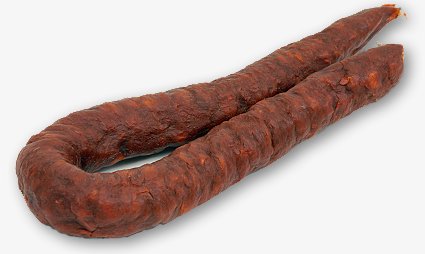
The photo above is "stage nine" cured dry chorizo sausage. Only the "sausage" inside one's gut can get even more extensive and longer—around 3 to 5 feet, and correspondingly heavier. The braided shape of the sausage mirrors the haustra pattern (small pouches) along the colon's walls. (Type 2 on Bristol Stool Scale].
With that photo in mind, it's easy to understand why so many people suffer from the ravages of P.M.S., prostatitis, constipation, hemorrhoids, irritable bowel syndrome, diverticular disease, and, eventually, polyposis and colon cancer. Try imagining this kind of "sausage" inhabiting your large intestine years on end and not getting your colon irritated or your genitourinary organs not trampled. Yuck!
Impacted stools often bypass anal sinuses (the folds between the colon and rectum) and enter the rectum (typically, the rectum chamber is empty). This condition can be determined via rectal self-exam. The presence of stools in the rectum may cause pain, discomfort, and the feeling of incomplete emptying—the condition is known as levator syndrome (from levator ani muscle).
When the colon and rectum can't accumulate any more stools, the incoming digestive fluids may seep over and cause a diarrhea-like condition, which is called “paradoxical diarrhea.” But the real paradox in this, pardon the pun, “shitty” situation is that very few primary care physicians are familiar with it.
Thus, instead of disimpacting a sufferer (removing impacted stools by hand, a specialized procedure usually performed in hospitals), doctors may recommend even more fiber to "restore stools." When the additional fiber has no place to go, it causes obstruction, perforation, or small intestine necrosis. These conditions are rarely survivable and always require massive abdominal surgery to excise the affected sections.
Here is even more bad news: unlike small, soft, and moist normal stools, impacted stools cause mechanical abrasions of the mucous membranes. In turn, these abrasions open a pathway to various pathogens into the inner reaches of the intestinal membranes and precipitate precancerous polyps. Along with the lack of protective bacteria, I believe this is the PRIMARY cause of colorectal cancers. One more reason to restore proper colon ecology! Only then can you avoid impacted stools, prevent dysbacteriosis, and restore intestinal flora.
Stage 10. The hallmark of IBS: Abdominal cramps
The enlarged stools fill up the large intestine and produce considerable pressure on internal organs, particularly the bladder, uterus, and fallopian tubes among women and the prostate gland among men. Since all of these organs have strong innervation and are quite sensitive, you may feel considerable pain, specific to premenstrual syndrome (P.M.S.) before and during periods. Men may experience heightened sexual tension from the pressure on the prostate gland. Both genders may be affected by frequent urination but without any significant volume of urine.
At this point, many people turn to "nutritionally-orientated" doctors and "natural" websites, which enthusiastically recommend restoring bacterial flora with all sorts of preparations. Great and well-worn advice by now, except for one little detail: mixing fiber with bacteria in one's gut is like making compost in one's backyard.
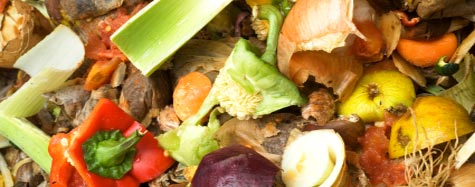
Household compost pile. Look familiar?
The round-the-clock fermentation of the “compost pile” produces copious gases, sharp acids, and toxic alcohols. Gases expand the large intestine. The expansion causes bloating. The bloated intestines squeeze neighboring organs and may cause obstructions, gastritis, heartburn, genital cramps, and so on. Acids irritate the mucosal membranes and may cause inflammation. Methanol—one of the alcohols—seeps into the blood and causes hangover-like side effects. Alas, not enough ethanol is produced to at least enjoy the experience.
The degree of suffering from abdominal cramps and intoxication varies greatly depending on one's age, gender, health, occupation, character, genetics, amounts of fiber, types of fiber, sources of fiber, and a whole load of other factors itemized in minutiae throughout this site and in Fiber Menace.
For as long as all of the above is tolerable, it's broadly accepted as a part of living. Between 10% and 15% of all Americans endure diagnosed or undiagnosed irritable bowel syndrome as just described. When the going gets tough, the tough go to see their doctors.
Stage 11: Medical treatment of IBS
Conservative treatment for severe abdominal distress relies on antibiotics — along with more fiber and/or fiber laxatives. First, antibiotics kill any remaining intestinal bacteria, terminate "composting," and alleviate intestinal inflammation. This tactic stops bloating and flatulence caused by gases and acidity produced by the fermentation of fiber. Antibiotics don't reduce stool size or relieve constipation. They may help to arrest diarrhea by removing and/or reducing its causes.
Next comes fiber: “Dietary fiber can help many patients by absorbing water and solidifying stool. It may benefit patients with either constipation or diarrhea.” So advises The Merck Manual of Diagnosis and Therapy, an unquestionable “gold standard” reference for most American doctors.
And so we go down the path of "substance abuse:" cramps—antibiotics—fiber— more cramps—more antibiotics—more fiber! In other words, you become dependent on fiber and/or laxatives.
The absence of bacteria requires more fiber or laxatives to deal with impacted stools. Newly consumed insoluble fiber acts as a plunger by pushing them out. That's, essentially, what fiber is — a plumber's plunger. And the straining is its handle.
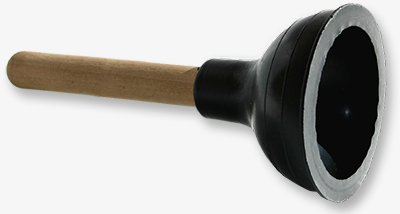
To make the passage possible, soluble fiber or laxatives lubricate and break down hardened stools, just like Drano® would hair clog. They soften them up somewhat and when consumed in excess, stimulate diarrhea.
Too bad your "plumbing" isn't made from cast iron. Even then, this stage may last and last — until one sad day, your gut "can't take it anymore" and hits you "on the head" with a leak!
Stage 12. A nasty side of IBS: Intermittent diarrhea
At one point, impacted stools, or inflammatory disease, or both, may cause profuse diarrhea—an innate physiological reaction to "self-cleanse" the affected large intestine, similar to vomiting.
After a while, the colon becomes "as clean as a whistle," but diarrhea disrupts the colon's ecology. Fiber is recommended to "restore formed stools." Formed stools usher back constipation and impacted stools, and this cycle repeats itself over and over again.
Of course, these well-known outcomes describe the classical symptoms of irritable bowel syndrome—round-the-clock abdominal distress accompanied by alternating patterns of constipation and diarrhea. At the same time, according to the doctors, "there is nothing wrong inside."
Back to "square one," unless... unless you follow my suggestions and break out from this trap, otherwise it's down to Stage #13. Oh, how appropriate!
Stage 13. Inflammatory Bowel Diseases(Ulcerative colitis and/or Crohn‘s disease)
The vicious cycles of intermittent constipation and diarrhea repeat over and over again until more severe complications arise. It may be hard-to-treat ulcerative colitis, or a devastating Crohn's disease, or excruciatingly painful hemorrhoids, or dreadful appendicitis, or gut-piercing diverticulitis, or a rarely survivable perforated colon, or deadly colon cancer, and God only knows what else.
When a person recovers from the initial treatment, more fiber is prescribed again to prevent all these conditions. Not surprisingly, up to 40% of people with ulcerative colitis undergo proctocolectomy—surgical removal of colon and rectum. Otherwise, they may bleed to death or die from colon cancer.
A similar pattern applies to Crohn's disease, hemorrhoidal disease, diverticular disease, cancer survivors, and pretty much everything else: fiber, more fiber, more darn fiber, until one day, no patient—no problem. And it all started with the accidental death of some "dirty little bugs" and fiber dependence in Stage 1.
The next section explains how to reverse the causes of IBS naturally and roll-back your state of health to pre-stage one status — proper colon ecology, normal stools, and IBS symptoms.This approach may not make you again "as good as new" — some of the above damage is irreversible, but it certainly beats becoming "as good as dead" if you follow the conventional IBS treatment. IBS. Recovery Guidelines
IBS Recovery Guidelines
s I have already remarked in the introduction, the IBS treatment guidelines in The Merck Manual represent what's known as the standard of care, or "a diagnostic and treatment process that a clinician should follow for a certain type of patient, illness, or clinical circumstance," according to Webster's Medical Dictionary.
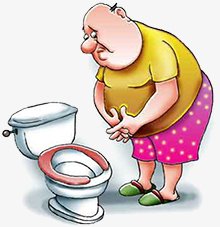
— Okay, okay, I'll have more fiber tomorrow!
This "standard of care" approach is taught in medical schools and residencies and followed closely by the majority of the US medical doctors, who (a) may not know another (or better) approach, and/or (b) use it to insulate themselves from malpractice lawsuits by deferring to their training, peer-reviewed protocols, and the said standard of care.
It's important to note that the "standard of care" doesn't mean "best care," "effective care," or even "good care." At best, it reflects the current consensus and prevailing groupthink of individuals and institutions, which profit from the treatment (or mistreatment in the case of IBS) of GI disorders.
Unlike The Merck Manual and similar references, this page enumerates in plain language the exact physiological causes of irritable bowel syndrome and offers practical, inexpensive, and self-administered treatment guidelines that provide full and rapid recovery, assuming your condition hasn't progressed far beyond IBS.
Even then, you still will find excellent (if not full) relief from bloating, flatulence, constipation, diarrhea, cramps, and pain, except it may take you longer, and you'll need to manage intercurrent conditions, such as hemorrhoids, anal fissures, or diverticulosis, more attentively.
I encourage you to share the information on this site and in Fiber Menace with your physicians. They won't find anything contradictory in these texts to the tenets of human anatomy, physiology, biology, biochemistry, and pathology. To help them (and you), this site and my books are all thoroughly referenced and, with few exceptions, accessible over the Internet.
Throughout the years, scores of medical professionals have read my books, heard my radio talk shows, attended my seminars, and scrutinized my web publications, and not one, I repeat, not a single one has ever sent me a note pointing out an error in my analysis or recommendations.
If anything, I hear back praise and encouragement — doctors and nurses are people too, and they suffer from digestive disorders just as much or more (because they are more likely to follow Merck-type advice) as the general population.
There are no risks or side effects of my recommendations because I do not propose drugs, lopsided diets, or invasive procedures. Your only risk is to ignore them and progress to inflammatory bowel diseases such as ulcerative colitis or Crohn's disease, or degenerative diseases of the GI tract, such as enlarged hemorrhoids, diverticulosis, or colorectal cancers. Some readers, particularly medical professionals trained in the so called evidence-based medicine, may respond to these claims with a well-expected challenge: Konstantin, prove it!
"Sorry," it would be against the laws of medical ethics (and civil and criminal statutes) to conduct a randomized controlled medical trial with a known negative outcome (for patients in the control group who would follow Merck's guidelines).
Merck classifies IBS as constipation-predominant or diarrhea-predominant. Some people are diagnosed with IBS without experiencing either constipation or diarrhea. Your steps to recovery will depend on your particular type:
Step 1. Wean yourself off the fiber. If you have been consuming dietary fiber or taking fiber laxatives, you'll have to break the dependence on these substances first because it's impossible to overcome IBS while consuming fiber. Skip this step if it isn't applicable in your case. Follow the recommendations in the Overcoming Fiber Dependence guide.
Step 2-A. Normalize stools for constipation-predominant IBS. Follow the recommendations in the Constipation guide. As soon as you complete this step, you'll find substantial relief from flatulence, bloating, abdominal pain, and cramps.
Step 2-B. Normalize stools for diarrhea-predominant IBS. If you can't abate diarrhea on your own by reducing or eliminating fiber and using over-the-counter medications such as Imodium, ask your doctor to test your stool for C.difficile infection.
Do this quickly; otherwise, this condition may cause significant anorectal damage (i.e., hemorrhoids, anal fissures, nerve damage) and eventually turn into IBD, or inflammatory bowel disease — a euphemism for ulcerative colitis and Crohn's disease.
If you are already affected by IBD (such as ulcerative colitis), you may not be able to reverse it entirely on your own because they have a significant autoimmune component. Still, all of the strategies described on this site and in Fiber Menace may help you a great deal.
Step 2-C: Normalize stools for IBS without either constipation or diarrhea. This condition is common in younger people and explained here. In this case, proceed with the Hydro-CM program.
Step 3. Restore intestinal flora and heal bowel inflammation (if any). This step restores proper colon ecology and stool morphology and protects you from IBD, polyps, and colorectal cancer. Follow the recommendations in the Dysbacteriosis (Dysbiosis) guide.
Step 4. Restore anorectal sensitivity. This step is essential for late-stage IBS, particularly constipation or diarrhea-predominant because both conditions damage anorectal sensitivity, so you don't experience the defecation urge sensation. This sensation is essential to maintain regularity and enjoy a complete emptying of the bowels. Follow the recommendations in the Restoring Anorectal Sensitivity guide.
Step 5. Stabilize and maintain your recovery. It isn't, really, a step, but a final and ongoing process. Use all of the available information on this site and in Fiber Menace to prevent an IBS relapse.
You should see and feel improvements soon after you start. Depending on your age and degree of acquired, organic (irreversible) damage, it takes three to six months to become completely free from IBS and its most bothersome and offensive symptoms.
It takes considerably more time to desynthesize hypersensitive nerves (visceral hyperalgesia) inside your abdomen; to reverse unconditional, endocrine reflexes (excessive secretion of certain substances in anticipation of food and stress); to reduce autoimmune reactions to common food allergens, and to readjust to a new style of nutrition. Just as with IBS itself, the actual length of time will depend on your age, health, and a degree of commitment and compliance with proper diet and supplements.
If you are relatively young and healthy, you won't have to think much about IBS after full recovery. For older people with a long history of IBS, staying free from IBS will require a life-long commitment and vigilance. Whatever it takes, it's better to be healthy and a bit preoccupied with your diet and colon than to be in pain, unhealthy, miserable, on a diet, and preoccupied with your colon even more. That is if you still have one!
Nutritional guidelines for IBS
The optimal nutrition for IBS depends on your age, health, and extent of your condition. “Optimal nutrition” means not just “best” or “permitted” nutrients, but also the frequency of eating, food preparation techniques, meal composition, and your ability to properly digest consumed food.
These considerations are commonly ignored or overlooked in the routine treatment of IBS. Consequentially, most people consume presumably a “healthy” diet, but only to dig themselves into even more problems.
Here are the principal recommendations:
-
Reduce the frequency of eating to two, maximum three times daily. Do not snack or drink fluids between meals. Do not chew gum. Make middle-day meals as low in fat as possible. Why? Any time you open your mouth and begin chewing and swallowing, particularly food rich in fat, the body goes through the motions of the gastrocolic reflex and mass peristalsis, or a contraction of the entire digestive tract..
These contractions are the primary cause of cramping, abdominal pains, and/or excessive bowel movements that may be confused with diarrhea-dominant IBS when they are semi-liquid.
Standard dietary advice for people with IBS is the complete opposite — eat smaller portions more often, snack between meals, drink plenty of fluids, etc. This commonplace ignorance has little to do with either IBS or the physiology of digestion.
In the absence of pain and cramping, frequent stools are the norm, not a symptom of IBS, regardless of what your doctor may have been telling you all along. These stools remain unformed simply because your colon isn't getting enough time to remove moisture and form them.
Consuming excess fiber, particularly soluble, may also complicate things by blocking the absorption of fluids and causing mild irritation of the intestinal mucosal membrane. These factors may stimulate peristalsis and excessive bowel movements, particularly in young and healthy people who aren't yet affected by nerve damage and/or bad habits such as withholding stools.
-
Eliminate hard-to-digest proteins. These are casein — a protein found in dairy (milk, ice cream, cream cheese) and gluten — a protein found in wheat, oats, bran, barley, malt, ice creams, processed meats (chicken nuggets), gravies, brewer's yeast, and derivative products (bread, pasta, morning cereals, beer, soy sauce, cakes, pastries, etc.)
Why? Because humans lack the enzymes to digest these proteins, and they are highly allergenic, particularly for people with digestive disorders. When undigested proteins pass into the intestines, they petrify (rot), cause gases, bloating, and low-level poisoning expressed as severe fatigue, foul mood, muscle pain, nausea, and so on.
-
Adapt your diet content and volume to your age. Most adults past 45-50 years old, particularly in the United States, suffer from age-onset gastric deficiency (AOGD, a term I coined), or a low level of digestive enzymes and gastric acid in the stomach.
This condition causes indigestion, heartburn, delayed stomach emptying, hiatus- hernia, gastritis, duodenitis, peptic ulcers, stomach, and esophageal cancers, and so on. AOGD is exacerbated by antacid medication, alcohol, mixed meals, overeating, frequent eating, inadequate chewing (habitual bad teeth, poor-fitting dentures), and overhydration. AOGD starts a chain of events that lead to a condition known as gastroenterocolitis, or an inflammatory disease of the entire GI tract.
There is only one way to adapt to AOGD: reduce the number of daily meals to two or three; do not eat mixed meals (i.e., proteins and too many carbohydrates); eat protein-containing meals once daily (the last meal is best), and follow other rules described on this site and in my books. This approach is described in detail in Fiber Menace, chapter X.
-
Always consume fluids 30 to 60 minutes before meals. It allows water to pass the stomach chamber into the small intestine and get assimilated there almost immediately. Any fluids consumed after meals remain "locked" in the stomach until digestion is complete; hence you can't quickly satisfy thirst even if you drink plenty of fluids. Excess fluids dilute already deficient gastric juices and cause indigestion or delayed digestion. Healthy children and young adults can consume plentiful fluids with meals or after with apparent impunity because they have smaller (less stretched out) stomachs, so the excess fluids are "pushed" out into the small intestine; they enjoy better teeth and have a much higher level of acid and enzymes in the digestive juices.
- Take recommended professional-grade supplements and, if necessary, digestive enzymes. They are essential to augment nutrients and enzymes missing from any restricted diet, recover from long-term malnutrition caused by IBS and IBD, and compensate for age- and disease-related problems with micronutrients' assimilation. There is a great deal of talk going on about supplements causing harm. If you consider the sub-par quality of consumer-grade supplements that most people are taking, this talk is fully justified [link].
Maintaining proper nutrition is one of the most challenging tasks for any person affected by digestive disorders. It isn't because there is anything specific or particular about it, but because eating (and overeating) became social phenomena; because it's so hard to keep a different diet from a healthy partner; because restaurants don't cater to people with digestive disorders; because most presumably healthy foods are atrocious, industrial junk; because the art and habit of nutritious and straightforward home cooking have been lost by most Americans born and raised in the fast-food era; because there are so many enticements to overconsume; and because so many people refuse to acknowledge their aging bodies, and fail to adjust to new realities.
In any event, when confronted with the choice of "keeping up with the Joneses" vis-à-vis living without IBS, drugs, and fear of colon cancer, I hope you'll choose the latter. And if you are still relatively young, and your experience with IBS was brief and fleeting, most likely, you'll be able to continue eating with blissful (or reckless) abandon for a good chunk of time. Assuming, of course, that you fix the IBS first, stay off fiber, and guard your gut from all of the perils mentioned on this site and in Fiber Menace.
The FAQ section below expands the nutritional guidelines considerably. I also recommend to review the rest of this site, and the discussion of transition away from a fiber-dependent diet in Chapter 11, Avoiding the Perils of Transition in Fiber Menace.
Frequently Asked Questions
Q. Why doctors can't find anything wrong with IBS patients?
Q. What is the difference in treatment between diarrhea- and constipation-predominant IBS.
Q. How come I was diagnosed with IBS while I have never been constipated or had diarrhea?
Q. How can I distinguish IBS from IBD?
Q. What's the difference between just "bloating" vis-à-vis "bloating and flatulence?"
Q. Why do antibiotics reduce cramping and bloating related to IBS and IBD?
Q. What's a difference between the role of soluble and insoluble fiber in the pathogenesis of IBS?
Q. Why people with IBS are advised to avoid fats?
Q. Does stress contribute to IBS? Is there indeed a psychosocial aspect to IBS?
Q. So, what's the role of psychotherapy in all this? Is it a fluke. or it has some role?
Q. What about alcohol? Is it bad for IBS?
Q. What‘s so special about table wines, and what it has to do with IBS?
I was affected by IBS for most of my adult life. I can easily trace its origins to my mother's insistence that I never use public restrooms, to indiscriminate use of antibiotics before I became aware of their perils, to dental amalgams that I had for many years, to fiber laxatives that I took for chronic constipation, and, finally, to years of a high-fiber, vegetarian diet.
I am IBS-free for over two decades. Unfortunately, by the time I had learned all this, enlarged internal hemorrhoids and reduced anorectal sensitivity had already been “set in stone.” Luckily, I don't suffer from them for as long as I follow all of the same recommendations described above.
So my interest in and the knowledge of this subject is far from abstract — I am not exactly a nun teaching sex education classes from textbooks written by a celibate monk.
Still, one man's journey through hell isn't enough to plot a path to heaven for another. That's why my work is so explicitly thorough, referenced, and detailed, and why it took me almost ten years after my recovery from IBS to contemplate, research, and write this page.
Good luck and be well,
Konstantin Monastyrsky
Commentaries
[1] Re: “the causes of IBS are still a mystery.”
There is nothing mysterious about IBS. Its causes are well-known and well-studied functional conditions, such as dysbacteriosis, suppressing stools, hard stools, excess dietary fiber, common food allergens, laxatives, and side effects of medications, and some others. All of them can be reversed reasonably well, with minimal effort, and without a doctor.
The Merck Manual, on the other hand, recommends screening patients for inflammations, ulcers, polyps, and other pathologies with IBS-like symptoms.
This approach is similar to using radiology (x-rays) and endoscopy to diagnose indigestion while ignoring to check for inadequate acidity, low enzymes, lousy diet, and poor-fitting dentures — the four principal causes of impaired digestion. No wonder then, when gastritis or ulcers aren't found, indigestion becomes a mystery.
None of it is surprising. In the general paradigm of allopathic medicine (which forms Merck's diagnostic and treatment framework), a disease isn't a disease unless it has a diagnostic procedure or prescription drugs attached to it.
Unfortunately for patients with IBS — a functional condition completely outside of Merck‘s framework — this reality introduces harmful diagnostic procedures, the side effects of unnecessary drugs, and more health problems down the road.
[back]
[2] Re: Aggressive medical treatment of inflammatory bowel disease
A nutritional approach to GI disorders described on this site and Fiber Menace may be practical for ulcerative colitis's early stages. It should always be tried before starting "shock and awe" treatment with antibiotics, steroids, and immunodepressants.
It may also enhance the treatment and improve Crohn's disease's outlook, but not really "fix it" because this condition has a significant autoimmune component that can't be controlled by diet alone.
This approach works well because a great deal of U.C.-related intestinal inflammation may result from gastroenteritis, so a gradual recovery must begin at the very top of the digestive tract.
Later stages of U.C. require a more thorough and intensive therapy, determined by your physician. But the nutritional approach is the same.
Initially, I described nutritional intervention for ulcerative colitis in my earlier Russian-language books. According to limited accounts from readers who followed it, they have recovered and remained in remission for as long as they maintained vigilance because ulcerative colitis might be easily set off again by preexisting trigger factors.
[back]
[3] Re: “Criticism” of The Merck Manual of Diagnosis and Therapy
Some people may get mad at me for suggesting that their revered Merck Manual may be wrong, and who am I to criticize it?
Most of the Merck Manual's shortcomings and biases are heavily influenced by the drugs-driven ways of it's publisher and a charter member of the Big Pharma — Merck & Co. Inc. The borderline between influence and profit is a very narrow one, and it forms an approach that may initially have good intentions, but not necessarily good outcomes.
Besides, if Merck & Co. could err so “deadly” with Vioxx or Fosamax, they can err just as much with The Merck Manual, because its editorial and professional scrutiny is nowhere near the hoops reserved for prescription drugs prior to their review by the FDA.
To be genuinely credible, trustworthy, and useful to doctors and patients alike, The Merck Manual should be fully divested from its ignominious parent and obliged to follow disclosure rules and transparency similar to the rest of the academic medical press.
You and I aren't alone consuming fiber in the name of our health only to suffer unknowingly from the scourge of IBS and its countless complications. And the more you suffer, the more fiber you are told to consume so that the Big Agra, Big Pharma, and Big Medicine can keep minting blood money from selling you more drugs, more toxic laxatives, more colonoscopies, and more surgeries.
According to the National Digestive Diseases Information Clearinghouse, as many as 20% of the adult population — that's close to 50 million Americans — are affected by IBS [link]. One of these people may be your close friend, colleague, or relative, or a child. But you may not even know about it because most people we know don't usually discuss the goings-on inside their guts.
So, just like I shared with you all that I know about fiber's devastating role in the pathogenesis of IBS, please click one or more of the buttons below to share this critical information with the people you love!