
Coenzymated Once Daily Multi
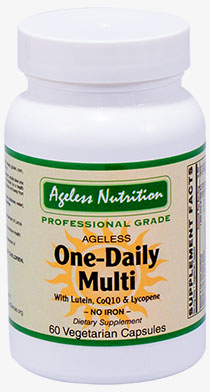
Professional-grade iron-free multivitamin complex for gastrointestinal and weight loss diet support. It is formulated for the optimal daily allowance of essential vitamins, minerals, and microelements.
The Once Daily Multi multivitamin formula is the foundation of the daily supplement formula. It is a comprehensive, highly concentrated vitamin-mineral-trace element supplement formula with over 30 essential ingredients.
Most people can’t properly assimilate common B vitamins like folic acid, B-12, or B-6, especially if they carry the MTHFR gene mutation. For this reason, the Once Daily Multi formula uses the coenzymated, bioactive forms of these vitamins. They don’t need to be converted in the liver or small intestine, so your body can absorb and use them right away, and they may be helpful for relieving fatigue, stress, brain fog, and chronic inflammation.
Once Daily Multi uses high-purity hypoallergenic ingredients and contains no yeast, corn, wheat, sweeteners, artificial colors, flavors, or preservatives. Every batch is dated to guarantee a minimum of 100% of the labeled claim for all ingredients up to the date indicated at the bottom of the container.
|
|||||||||||||||||||||||||||||||||||||||||||||||||||||||||||||||||||||||||||||||||||||||||||||||||||||||||||||||||||||
|
|||||||||||||||||||||||||||||||||||||||||||||||||||||||||||||||||||||||||||||||||||||||||||||||||||||||||||||||||||||
How to take the Once Daily Multi formula
The following suggestions belong to the category of common sense “wisdom,” not rules. These points will help you get a “better bang for the buck” out of these supplements, enjoy the experience, overcome unlikely obstacles, and avoid minor embarrassments.
Supplements aren‘t pharmaceutical agents with well-defined pharmacogenetic and related side effects. For that reason, high-quality supplements should be nearly unnoticeable in day-to-day use — no highs, no withdrawal effect, no effect on the digestive tract, nor any perceptible reaction following ingestion.
Nonetheless, if you are a hypochondriac, you may faint just by looking at those pills. In this case, I recommend a positive attitude. On the other hand, you may benefit from these supplements even more because the power of self-suggestion can indeed produce “miracles” as long as these suggestions are positive and constructive.
Further down, in the What to Expect section, I‘ll describe the longer-term positive effects of this concrete, apparent, and measurable supplements. But to get there, start by following these suggestions:
Take this supplement with a large meal because this approach allows it to assimilate along with food gradually. The presence of fats in food enhances the assimilation of fat-soluble vitamins A, E, D, and K and improves the assimilation of minerals.
Avoid ingesting too much water when swallowing supplements, particularly after the meal. Excess water hampers digestion by diluting the concentration of digestive juices. It may not be as apparent in healthy young adults, but is a concern for anyone with impaired digestion, a history of gastric disorders, or adults past 50. For this reason, it‘s best to use fluids that accompany your meal, such as wine, soup, or mineral water.
If you are routinely choking on capsules, try swallowing them along with your food. In many cases, the difficulty is physiological, considering the size of the bolus (a lump of chewed food) that we all swallow easily. Some people (myself included) can swallow several capsules in one “scoop” easier than one by one.
This supplement feature capsules with rapid disintegration characteristics (that‘s a good asset!). If you use hot liquids to swallow it, a capsule may get sticky and attached to the esophagus wall. In this case, just chew on some food, and the bolus will push them through.
B-complex, Chromium, Zinc, and Cooper supplements have a strong smell. If you are experiencing belching, you may sense the scent of these supplements for up to 6 to 8 hours after a mixed meal (i.e., protein and carbs). It is normal because the digestion of proteins usually takes that long. The belching — the escape of air and gases from the stomach — happens when the gastric valve opens up during food or saliva swallowing.
Mild belching without heartburn is normal, especially if you drink carbonated beverages or talk while eating and swallow air in the process. Strong belching suggests fermentation in the stomach and may indicate delayed stomach emptying, inadequate acidity, low enzymes, poor chewing, and a host of other factors unrelated to the supplements. Supplements themselves don‘t cause or contribute to belching.
Riboflavin (vitamin B-2) is an intensely yellow water-soluble substance and may change urine color (to a deeper yellow). It is normal. Also, urine smell may change somewhat because of supplements. That‘s normal too. You‘ll have the same effect if you consume a lot of food rich in B-complex vitamins, such as dark leafy vegetables.
If you can‘t swallow capsules or tend to choke, switch to liquid supplements instead. It‘s not a good idea to force yourself or choke accidentally.
Don‘t give capsules or tablets to young children to prevent choking. Use liquid supplements instead.
Don‘t take encapsulated supplements if you had stomach reduction surgery. Take liquid supplements instead.
Improved sleep. These supplements don‘t cause insomnia or migraine headaches because they don‘t contain any known stimulants or additives. Extra calcium and magnesium cause a relaxing effect and may improve sleep, mood, circulation, and a general relaxation of nerves and muscles.
Improved thermogenesis. You may find that you don‘t get cold as often, and your basal and daily body temperature goes up. It is related to the daily intake of iodine with these supplements. Iodine is often missing in North American diets, particularly among people drinking tap water or avoiding table salt.
Moderate weight loss if you are overweight. You may start losing weight. Also, regular intake of high-grade B-complex vitamins improves energy metabolism and increases body thermogenesis.
Moderate weight gain if you are underweight because of the increase of the muscle and bone mass related to the daily presence of vitamins responsible for the muscle and bone tissues’ biosynthesis and minerals that deposit themselves inside the bone matrix.
Reduction of cravings and appetite. These supplements reduce all kinds of cravings and hunger. Low-quality supplements, particularly in hard-pressed tablets, stimulate appetite because of mechanical irritation from hard-to-digest tablets. You are not going to experience these side effects with Ageless Nutrition supplements.
Decreased bloating, constipation relief, healing of anal fissures, particularly in combination with Hydro-CM program. These cumulative positive effects result from the combination of factors present in these supplements, particularly calcium, magnesium, vitamin C.
Increased energy. You may also find that your energy and stamina may increase because of improved energy metabolism, stable blood sugar, increased thermogenesis, restoration of thyroid gland function, and better blood oxygenation (see below).
Improved oxygen transport. Regular intake of vitamin C, B-12, folic acid, and essential fatty acids normalizes your hemoglobin count and eliminates borderline or acute anemia. (Incidentally, I recommend starting a weight loss regimen not through a reduction diet but with intense supplement “therapy.” It‘s near impossible to attain and retain significant weight loss with low thermogenesis, low metabolic rates, unstable blood sugar, constant cravings, and borderline anemia. It is probably one of the most important recommendations on this page, and it ended up in parentheses. Oh, well.)
Resistance to respiratory infections. You are less likely to be affected by the common cold and other respiratory infections because these supplements enhance immunity and resistance. Even if you acquire a disease, it may pass faster, and you are less likely to experience transient or permanent side effects.
Enhanced memory and concentration. Your concentration and memory function will improve because of improved circulation, energy metabolism, normalization of substances that carry nerve signals, and the abatement of inflammatory conditions that affect nerve tissues.
Improved eyesight. Your eye vision, particularly at night, will improve and remain stable because you‘ll be regularly receiving RDA-recommended doses of Vitamin A. In general, people who are taking supplements through most of their middle-age years aren‘t likely to develop cataracts — a nutrient-deficiency condition.
Increased libido. Supplements improve sex in many ways. The most noticeable ones include less fear of sex because orgasms don‘t drain you as much and stronger orgasms because of improved circulation. There is also abatement of premature ejaculation because, to a large extent, it is related to an inflammatory condition of nerve receptors. You‘ll feel more interest in sex because of the overall improvement in sex hormones synthesis. You‘ll have less vaginal dryness or an increased volume of seminal fluid. These improvements are more noticeable after 45-50 but don’t expect miracles past 65-70, especially if you are not physically active, consume alcohol, or take prescription medicines.
Reduction of cavities and gum disease. Teeth are the only exposed bone tissue. They reflect general bone health better than any x-ray. Quality supplements combined with bone-healthy nutrition yield dramatic and noticeable results for teeth and gums.
Healthier and stronger hair, nails, and skin. The health of these tissues improves for the same reasons why bone tissues improve — just like the bones, collagen is a primary building block of hairs, nails, and skin. The collagen synthesis requires a steady supply of vitamin C, copper, and essential fatty acids, which today‘s urban diet can't reliably provide without supplements.
Abatement of edemas. Edemas result from electrolyte imbalance in the blood, lymph, and intracellular fluids. Some aspects of electrolyte balance are controlled by minerals and proteins that come only from dietary sources, so the deficiency of these nutrients may cause edema. Getting rid of these deficiencies with diet and supplements is a much better approach than with diuretics, which may reduce edema at the price of even higher deficits.
-
Age-related reduction of assimilation. As we get older, the human growth hormone (HGH) begins to drop precipitously. By the mid-life point (50-60), even healthy people digest and assimilate third to half as efficiently as in their teens. It is the reason why the athletes, as well as Rambo and Rambo-wannabes, are taking HGH. I believe HGH will eventually cause cancers just like hormone replacement therapy did to women, so I‘d rather take quality supplements than hormones
-
Need to compensate for prior losses. If you begin taking high-grade supplements for the first time in your late 40s, early 50s, and beyond, you may already have suffered substantial mineral deficits in your body stores, which are primarily bones. This condition can manifest itself as low bone mineral density (BMD). Thus, any supplements that you are taking now must not only provide for your daily requirements but must also replenish those stores.
-
Diet composition. Some food components, such as acidic juices, tannins in tea, or some coffee substances, may bind and neutralize certain micronutrients and render them useless. So outside of the lab, in real life, 100% digestion is rarely a “sure thing,” particularly with minimal doses
-
Exclusion of fortified foods. By excluding foods with high-carbohydrate and high-fiber content, such as breakfast cereals, bread, pasta, juices, and low-fat dairy, you are also excluding all food fortified with synthetic supplements—further reducing the pool of available micronutrients.
-
Overhydration. People who consume more fluids than necessary will lose substantial amounts of minerals through urination. Hence they need much more to replace the losses. This problem is further exacerbated by caffeinated beverages such as tea, coffee, colas, and energy drinks.
-
Environmental factors. People without adequate exposure to UV radiation from the sun will have a much lower absorption rate of calcium, magnesium, and phosphorus. Hence they may need much larger doses of these essential macrominerals and supplemental vitamin D.
-
Intestinal flora status. A person with damaged intestinal flora may need larger amounts of vitamin K and biotin than a person with normal flora, who may need none.
-
Common medicines. It‘s widely known that certain medications may impact liver function, digestion, absorption, and, hence, interfere with micronutrients’ assimilation. It is especially apparent from the side effects of cholesterol-lowering medicines (statins), diuretics‘ impact on the loss of minerals through urine, heartburn medication on digestion, and many others.
-
Medical conditions. Numerous medical conditions, particularly digestive disorders, may interfere with digestion and assimilation of micronutrients. Large but still safe doses account for these disorders.
-
Medical interventions and trauma. Medical emergencies of any kind escalate physical needs for nutrients. People who routinely donate blood may also require large supplemental intakes.
-
Gender. Women of childbearing age require substantially larger doses of supplements during certain phases of ovulation, during and after periods, and before, during, and after pregnancy and lactation.
-
Laxatives may cause a considerable loss of fluids with stools. These fluids may contain unassimilated minerals, trace elements, and water-soluble vitamins. Laxatives, particularly fiber-based, interfere with the digestion of micronutrients, causing a further deficiency.
-
Lower bioavailability. Any manufactured supplements, even the absolute best, may not be as potent and active as similar substances obtained in their natural form from unprocessed food. Hence the doses indicated on the supplement label may be lower than the body‘s intrinsic requirement.
-
Compensate for oxidative damage from environmental pollution and undesirable additives. It‘s a well-established fact that people with the highest intake of micronutrients have the least oxidative damage caused by second-hand smoke, pesticides, herbicides, food additives, and other pollutants. This kind of damage is impossible to account for when measuring base vitamin levels, hence the extra allowance.
-
Larger weight and height. RDAs reflect supplement needs for adults whose weight, height, and body frame fits into a model-like body. Most Americans aren‘t remotely close to this ideal and weigh substantially more than models. Strange but true — even fat cells need nutrients. Breast, brain, and blood (leukemia, lymphoma) cancers are classic examples of cancers developing in organs composed mainly of fatty tissues.
-
Stress exposure. If you believe the truism that stress kills, then it‘s easier to realize that today‘s high-stress urban living also demands higher nutrient intake to counteract internal damages caused by stress and related factors.
-
Exercise. Most, if not all, centenarians lead active lifestyles, but they don‘t exercise. That‘s because they don‘t need to and because they subconsciously avoid risks related to exercise. In fact, people who live long lives are known for lots of sleep and leisurely lifestyles. If you exercise, the resulting low-level organ trauma, oxidative damage, and nutrient loss from sweat require a higher nutrient intake.
-
Children safety. Accidental overdose of iron-containing products is a leading cause of fatal poisoning in children under six, and these supplements aren't available in child-proof containers.
-
Possible toxicity. To prevent potential toxicity in women past menopause and healthy men, who may not require additional iron supplements.
-
Fortification of wheat flour. People who routinely consume products from fortified flour (breakfast cereals, bread, pasta) are already getting sufficient iron amounts.
-
Hem iron in natural meats. Individuals who regularly consume beef, lamb, and organ meats may be getting enough iron and don't require supplementation.
-
High level in drinking water. In certain areas, drinking water may contain sufficient amounts of dietary iron, and supplementation isn‘t required.
-
Minor losses. Iron is stored and well retained in the body, so iron deficiency is unlikely under normal circumstances. Supplemental iron is recommended for individuals with confirmed iron-deficiency anemia related to blood donations, trauma, internal bleeding, or surgery.
Adverse effects
Once Daily Multi multivitamin formula isn’t known to cause adverse effects. In general, high-grade supplements should be unnoticeable. When supplements are noticeable in any way, other than described above, it indicates the subpar quality or the presence of inappropriate substances, such as allergens, diuretics, or hypertensive agents.
The Once Daily Multi formula isn’t known for causing allergies or any other adverse effects. If you experience any, put all supplements aside until these effects pass, and then try again, taking one supplement at a time to determine what may have caused the adverse effect.
Unlike many low-quality supplements, the Once Daily Multi formula’s ingredients don‘t cause diuretic effects (for the same reasons as above). In the unlikely event you experience excess urination, just put these supplements aside for a few days to normalize urination, then resume taking them gradually.
Low-quality supplements with inorganic salt minerals, additives, and herbal stimulants may cause considerable blood pressure spikes — the blood volume expands rapidly to dilute the offending substance to an acceptable level.
Once Daily Multi formula does not contain dietary iron. You may need additional supplemental iron if you are breastfeeding, pregnant, or planning to become pregnant, or you are a blood donor or diagnosed with anemia.
Once Daily Multi doesn't contain vitamin K that may not be advisable for people taking antiplatelet or anticoagulant drugs, such as Plavix, Coumadin (warfarin), Heparin, Aspirin, and similar others.
What to expect
The supplements don‘t work the “next day” because they are neither drugs nor stimulants. In general, people who are young and healthy will notice supplements‘ effects the least. That is, they‘ll simply remain young and healthy much longer than their contemporaries.
Older people, particularly those affected by age-related conditions such as chronic fatigue, borderline depression, transient pains, migraines, low energy, edema, irritability, indigestion, or low immunity, recognize the benefits of supplementation faster because these conditions may gradually abate.
In general, depending on the condition, it takes from a few weeks to a few years to see the improvements because the body takes time to regenerate and rebuild tissues and organs. The body has its priorities, and it takes time to saturate its basic needs and “reset the alarms” caused by long-term deficiencies.
If you follow my Fiber Menace recommendations, you may see improvements faster because the outcome of any nutritional “therapy” is also a function of digestive, endocrine, and cardiovascular systems. Both entirely dependent on nutritional hygiene (what, when, and how much) and nutrients (what gets digested).
Well, I will stop here because I don‘t want to set up false hopes and imply that supplements are miracles. These things are happening for the same reasons why healthy people don‘t have them in the first place. It is particularly apparent in well-known longevity zones — a diet there provides all the same nutrients naturally, with high-quality drinking water and nutrient-dense food, as described in The Ingredients of Longevity Nutrition essay.
And let me remind you that the Hollywood glamour set, professional athletes, and the majority of ultra-rich patronize nutritionally-oriented “celebrity” doctors. They receive similar advice as you are getting on these pages and get their supplements from the same “secret” source I use.
Frequently Asked Questions 
Q. Why this supplement contains so many more vitamins and minerals than something like One A Day or Centrum?+
Supplements like One A Day™ and Centrum™ are formulated to match the “standard” known as the Recommended Dietary Allowances or RDAs. These nutritional guidelines were established by the United States government in 1941 with an admirable goal to keep the population of America fit and healthy. As you may have guessed, the outcome of this effort is a certified fiasco, with or without One A Day or Centrum.
According to the Food and Nutrition Board of the National Academy of Sciences, the authors of the Recommended Daily Allowances [link]:
“Their primary goal [of RDAs — ed.] was to prevent diseases caused by nutrient deficiencies. Technically speaking, the RDAs were not intended to evaluate the diets of individuals, but they were often used this way.”
Translation: The RDA recommends a minimal reference intake of supplements to prevent major degenerative diseases, such as scurvy, rickets, scoliosis, night blindness, neural tube defects, osteoporosis, pellagra, beriberi, and so on. The RDA wasn‘t intended to become a benchmark for supplements or diets. Still, manufacturers of cheap supplements and diet promoters promoted them “as is” anyway to give them “scientific” justification and “academic” credibility.
In other words, the Food and Nutrition Board quietly repudiated the entire framework behind One A Day, Centrum, and everything else connected to “healthy” nutrition as useless and deceptive. And it didn‘t stop there:
“In 1997, the Food and Nutrition Board of the National Academy of Sciences did something dramatic: they changed the way nutritionists and nutrition scientists evaluate the diets of healthy people with the creation of the Dietary Reference Intakes (DRIs).”
This “something dramatic” statement is behind the formulation of Ageless Nutrition supplements along the lines of the “Tolerable Upper Intake Level (UL). It represents the highest level of daily nutrient intake that is likely to pose no risk of adverse health effects for almost all individuals in the general population,” defined by the new DRIs.
Before the DRIs were published, these kinds of supplement formulations were called Optimal Dietary Allowances (ODA). The objectives behind ODAs (or ULs) are to account for the following factors:
Once you consider all these factors — and I counted 17 — it becomes apparent just how simplistic the RDA one-size-fits model was and still is. That‘s why I recommend others to do as I do and take professional-grade supplements formulated according to the Optimal Daily Allowances criteria — a more reliable and effective than a meager RDA amount.
Q. Why doesn't this formula include iron?+
A dietary iron supplement isn‘t included in Once Daily Multi intentionally for the following reasons:
Growing children, women of child-bearing age, and lactating mothers have higher iron requirements. They should take additional iron supplements from individual child-proof containers. (A professional-grade formula will be available here shortly).
Vegans and individuals who observe dietary kashrut/halal laws (observant Jews and Muslims) may also require supplemental iron and related supplements because vegan diets and kosher (drained-off blood) meats may not provide enough iron to prevent anemia.
Keep in mind that anemia may be related to factors other than iron deficiency, such as the deficiencies of vitamin B-12, folic acid, vitamin C, essential fatty acids, and primary (animal) proteins. Inadequate diet and malnutrition-related to fiber consumption are the primary reasons behind these deficiencies, as described here and here.
Finally, since this site is about colorectal disorders, allow me to dispel one very pervasive myth: dietary iron doesn't cause constipation, as many people believe. In fact, iron overdose causes acute diarrhea. [link]
Q. What should I do with the supplements I miss or tablets I set aside?+
I don‘t have a satisfactory answer to that question. You may put them aside to use when you forget to reorder the refill on time, or give them to your spouse or a child, or whatever. In general, if you keep these supplements in a dry, cool, and dark place, they‘ll store well.
Q. For how long should I take these supplements?+
I hope this question is rhetorical, not practical. The retort is: “How long should you eat for?” or “For as long as you wish to remain healthy!” But these are self-serving replies, so I‘ll try to elaborate on them a little.
First, there is no one-size-fits-all answer because the number of variables affecting each individual is almost infinite.
Second, it depends on your goals. You can take supplements until you recover from some conditions caused by nutritional disorders. Or, you can take supplements for preventing these disorders. Or, you can start retaking supplements when something is amiss.
Third, from my twelve years of taking supplements (since 1996), I can say that there is such a thing as “supplement fatigue,” especially among healthy people. I first started to experience this ”fatigue” about ten years into this process. So I may go a week or two without supplements or take only morning capsules one day, and the evening capsules another day. I guess that by then, my body has had its fill, and I listen to it attentively. Even then, I rarely miss a day of taking vitamin C and cod liver oil.
You should also note that I have been on a low-impact diet for the past 12 years, and my lifestyle is relatively “low maintenance” — no daily commute, I work at home, I take off whenever I feel like it, and I enjoy daily walks in the park instead of the gym. People who “work and play” harder would have a much higher need.
Fourth, certain supplements are considered “therapeutic,” such as dietary iron to treat anemia or vitamin A to treat night blindness. When these conditions are objectively eliminated, you either reduce the dosage or drop the supplement altogether.
Finally, honestly, I don‘t believe there is one answer regarding the base supplements. Or perhaps the answer is: “When the day comes to end taking them, you‘ll know it!”
Q. What about your other customers — do they take supplements for a long time?+
About 60% to 70% take our supplements for longer than three months, about 20% to 30% for longer than a year, and about 10% to 15% never stop. That sounds about right — in practically any sphere, the 80-20 rule governs above-average success and compliance.
In general, people who are older and had more problems to start with are the most compliant. Some younger professionals stay with this regimen with religious fervor because they realize that their career and performance depend on having top-notch health, appearance, and energy.
I believe that people who read this site may be more compliant because this is the first time I‘ve made such a detailed case for supplements. I barely mention supplements in Fiber Menace, and Russian-Americans (the readers of my first two books) are very leery of any sales pitch regarding supplements.
That‘s because supplements aren‘t in their DNA and because many got burned by numerous MLMs that preyed on first-generation emigrants. And they still do: low resistance to peer pressure — a hallmark of MLMs — is more common in tight emigrant “ghettos” than in the dispersed and highly independent “indigenous” population.
The Food and Drug Administration has not evaluated this information. This product is not intended to diagnose, treat, cure, or prevent any disease.