
Top twelve myths about fiber
The recent popularity of fiber in medicine and nutrition is based on old wives' tales and intentional lies that have little to do with either science or medicine. These lies and tales are retold ad nauseam in medical offices, web sites, diet books, college courses, government pamphlets, and on and on. Tell a lie one time too many, and it soon turns into a pervasive and believable myth. I don't have to tell you, just how dangerous medical doctrines are, when they are built on mythology.
— Fiber is bad? Konstantin, have you gone postal?..
Well, judge for yourself! Find a flaw, or prove otherwise. If you don't find any, you'll go postal too. If you continue to have doubts after reviewing the presented facts, just follow the links to the primary sources, and keep researching these facts until you are fully convinced that there is no quoting out of context going on here.
Myth #1: For maximum health, obtain 30 to 40 g of fiber daily from fresh fruits and vegetables.
Myth #3: Fiber-rich foods improve digestion by slowing down the digestive process.
Myth #4: Fiber speeds food through the digestive tract, helping to protect it against cancer.
Myth #5: Fiber promotes a healthy digestive tract and reduces cancer risk.
Myth #6: Fiber can offer protection from breast cancer.
Myth #7: Fiber lowers blood cholesterol levels, triglycerides, and prevents heart disease.
Myth #8: Fiber satisfies hunger and reduces appetite.
Myth #9: Fiber prevents gallstones and kidney stones.
Myth #10: Fiber prevents diverticular disease.
Myth #11: Fiber is safe and effective for the treatment and prevention of diarrhea.
Myth #1: For maximum health, obtain 30 to 40 g of fiber daily from fresh fruits and vegetables.
Reality: Here is how many fresh fruits you'll need to eat throughout the day in order to obtain those 30 to 40 grams (1-1.4 oz) of daily fiber:

That comes to five apples, three pears, and two oranges. A small apple contains 3.6 g of fiber and 15.5 g of sugars. A small pear—4.6 g and 14.5 g; and a small orange—2.3 g and 11.3 g respectively (USDA National Nutrient Database; NDB #s: 09003; 09200; 09252).
These ten small (not medium or large) fruits will provide you with 36.4 g of indigestible fiber and a whopping 143.6 g of digestible sugars, or an equivalent of that many (ten) tablespoons of plain table sugar!
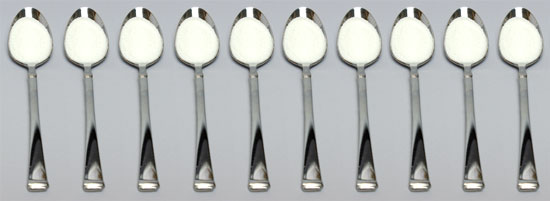
And that‘s before accounting for all the other carbs consumed throughout the day for breakfast, lunch, dinner, and from snacks and beverages.
So ask yourself this question: even if you are a 100% healthy 25-year-old muscle-bound athlete, would you ever ingest that much sugar willingly? The answer is obvious—no way! Well, maybe under the influence of a controlled substance or torture. But certainly not while of sound mind!
But that's exactly what's being recommended for “health purposes” to American children and adults. It‘s not surprising that so many are suffering from the ravages of diabetes and obesity—the total daily carbohydrate requirement for an average adult is under 200 grams, even less for children.
The ratio of digestible carbohydrates (sugars) to fiber in vegetables, cereals, breads, beans, and legumes is, on average, similar to fruits. Thus, no matter how hard you try to mix'n'match, you'll be getting screwed all the same. Incidentally, that's the meaning of those brass screws in the cereal bowl on the front cover of Fiber Menace.
This myth—that fruits and vegetables are the best source of fiber—is probably the most pervasive and damaging of all. If fiber is what you‘re really after, you‘re better off getting it from fiber supplements. These, after all, have almost no digestible carbs. But, then, of course, you run into those other persistent falsehoods...
Myth #2: Fiber reduces blood sugar levels and prevents diabetes, metabolic disorders, and weight gain.
Reality: That's a blatant deception. If you consume 100 g of plain table sugar at once, the blood absorbs all 100 g of sugar almost as soon as it reaches the small intestine, where the assimilation takes place. If you add 30 g of fiber into the mix, the fiber will first clog the stomach for a while. Second, it will partially block intestinal absorption, which, in turn, will extend the rate of sugar assimilation into the blood, from, let‘s say, one hour to three.
But at the end of those extra three hours the blood will still absorb exactly the same 100 g of sugar—not an iota more, not an iota less. If you are a diabetic, the only difference will be that you‘ll require more extended (long-acting) insulin (for type 1 diabetes) or larger doses of medicine (for type 2 diabetes) to deal with slow-digesting sugars, and your blood glucose test will not spike as high after the meal.
But you‘re fooling no one but a glucose meter. In all other respects, the damage will be all the same, or even worse. That's because the carbohydrate load on the cells, liver, pancreas, and kidneys from extended sugar digestion, elevated insulin, and high triglycerides (assimilated fatty acids) is much higher. And that‘s even before taking into account the negative impact of fiber on the digestive organs, or hyperinsulinemia and triglycerides on the heart, blood vessels, and blood pressure.
Once inside the large intestine, most of that fiber will get fermented into volatile gases (cause bloating, cramping, and flatulence); short-chain fatty acids (at 2.5 to 4 calories per g, in excess cause anal itching, diarrhea, and hemorrhoidal inflammation); and alcohols (at 7 calories per g). Most of those substances get assimilated into your blood as fast as bacteria can make it happen.
Now, on top of nauseating gases and extra calories from fatty acids, you are also getting hit with alcohols, including methanol, which is quite toxic even in trace amounts. So if you still can't pin down the causes of that nagging migraine, or lousy sleep pattern, or anxiety, or depression, or fatigue, then just shut down that little distillery inside your gut. 'Sober up,' and enjoy some peace and quiet.
Myth #3: Fiber-rich foods improve digestion by slowing down the digestive process.
Reality: Fiber indeed slows down the “digestive process,” because it interferes with digestion in the stomach and, later, clogs the intestines the “whole nine yards.” The myth is that it can be good for health and the digestive process.
Here is what you get from delayed digestion: indigestion (dyspepsia), heartburn (GERD), gastritis (the inflammation of the stomach‘s mucosal membrane), peptic ulcers, enteritis (the inflammation of the intestinal mucosal membrane), and further down the chain, constipation, irritable bowel syndrome, ulcerative colitis, and Crohn‘s disease.
All this, in fact, is the core message of Fiber Menace: fiber slows down the digestive process! And slow digestion is ruinous for your health. Don‘t mess with fiber unless your gut is made of steel!
Myth #4: Fiber speeds food through the digestive tract, helping to protect it against cancer.
Reality: Not true. In fact, this claim directly contradicts the claim that fiber-rich foods slow down the digestive process. For a reality check, here‘s an excerpt from a college-level physiology textbook that reveals the truth:
Colonic Motility
Energy-rich meals with a high fat content increase motility [the rate of intestinal propulsion]; carbohydrates and proteins have no effect.
R.F. Schmidt, G. Thews;
Human Physiology, 2nd edition. 29.7:730
This, incidentally, is why low-fat diets and constipation commonly accompany each other. And don't count on getting any cancer protection from fiber, either. That‘s yet another oft-repeated deception.
Myth #5: Fiber promotes a healthy digestive tract and reduces cancer risk.
Reality: Not true. Here's what doctors-in-the-know have to say on the subject of the colon cancer/fiber connection:
Lack of Effect of a Low-Fat, High-Fiber Diet on
the Recurrence of Colorectal Adenomas
“Adopting a diet that is low in fat and high in fiber, fruits, and vegetables does not influence the risk of recurrence of colorectal adenomas.”
Arthur Schatzkin, M.D et al.
The New England Journal of Medicine;
April 20, 2000; 342:1149-1155. PMID: 10770979
The excerpt below comes, of all places, from the Harvard School of Public Health:
Fiber and colon cancer
“For years, Americans have been told to consume a high-fiber diet to lower the risk of colon cancer—mainly on the basis of results from relatively small studies. Larger and better-designed studies have failed to show a link between fiber and colon cancer.”
Fiber: Start Roughing It
Harvard School of Public Health
Not convinced yet? Well, here is even more damning evidence from the U.S. Food and Drug Administration:
Letter Regarding Dietary Supplement Health Claim for Fiber With Respect to Colorectal Cancer
“Based on its review of the scientific evidence, FDA finds that (1) the most directly relevant, scientifically probative, and therefore most persuasive evidence (i.e., randomized, controlled clinical trials with fiber as a test substance) consistently finds that dietary fiber has no [preventive] effect on incidence of adenomatous polyps, a precursor of and surrogate marker for colorectal cancer; and (2) other available human evidence does not adequately differentiate dietary fiber from other components of diets rich in foods of plant origin, and thus is inconclusive as to whether diet-disease associations can be directly attributed to dietary fiber. FDA has concluded from this review that the totality of the publicly available scientific evidence not only demonstrates lack of significant scientific agreement as to the validity of a [preventive] relationship between dietary fiber and colorectal cancer, but also provides strong evidence that such a relationship does not exist.”
U. S. Food and Drug Administration
Center for Food Safety and Applied Nutrition Office of Nutritional Products, Labeling, and Dietary Supplements; October 10, 2000
[link]
Alas, the story doesn't end there. Adding insult to injury, Chapter 10, Colon Cancer cites studies that demonstrate the connection between increased fiber consumption and colon cancer. Also, countries with the highest and lowest consumption of meat are compared. Not surprisingly, the countries with the lowest consumption of meat and, correspondingly, the highest consumption of carbohydrates, including fiber, have the highest rate of digestive cancers, particularly of the stomach.
Myth #6: Fiber offers protection from breast cancer.
Reality: A blatant, preposterous lie. According to the recent massive study jointly conducted by the U.S. Center for Disease Control and Prevention, the Ministry of Health of Mexico, and the American Institute for Cancer Research, it‘s the opposite: women with the highest consumption of carbohydrates, and, correspondingly, of fiber, had the highest rates of breast cancer:
Carbohydrates and the Risk of
Breast Cancer among Mexican Women
“In this population, a high percentage of calories from carbohydrate, but not from fat, was associated with increased breast cancer risk.”
Isabelle Romieu, et al;
Cancer, Epidemiology, Biomarkers & Prevention;
2004 13: 1283–1289. PMID: 15298947
A similar relationship had been established between the risk of colorectal cancers and the consumption of carbohydrates:
Digestible‘ Carbohydrate [sic]
May Boost Colorectal Cancer Risk
“...people consuming the highest amounts of digestible carbohydrates had a higher risk for developing colorectal cancer compared with those eating the lowest amounts.”
Joene Hendry; Reuters Health; June 27, 2002.
Although these studies single out carbohydrates as the culprit behind various cancers, where there's smoke, there's also fire: carbs and fiber are as inseparable as Siamese twins, as I have already explained in Myth #1.
Myth #7: Fiber lowers blood cholesterol levels, triglycerides, and prevents heart disease.
The myths about fiber‘s role in coronary heart disease (CHD) and the management of elevated cholesterol have their roots in some dubious research, which culminated in “reduced mineral absorption and myriad of gastrointestinal disturbances” after the study participants were given supplements containing a mixture of guar gum, pectin, soy fiber, pea fiber, and corn bran along with a low-fat and reduced cholesterol diet.
The total reduction of LDL cholesterol after 15 weeks was from “7% to 8%”. As any cardiologist will tell you, the reduction of “bad” cholesterol from, let's say, 180 to 166 mg/dL (-8%) is completely meaningless. Besides, if you cause someone to have a “myriad of gastrointestinal disturbances” in the process, that person is more likely to die prematurely from malnutrition and cancer than of stroke or heart attack.
Even then, this marginal reduction of cholesterol had little to do with fiber, and everything to do with the reduction of dietary fats. LDL cholesterol happens to be a major precursor to bile. The moment a person is placed on a low-fat diet, their cholesterol level drops because their liver no longer needs to produce as much bile.
In addition, intestinal inflammation caused by soluble fiber blocks the ability of bile components to get absorbed back into the bloodstream, further lowering the cholesterol level. This is as basic as the physiology of nutrition gets, and it makes the whole claim of a fiber-cholesterol connection a deliberate con.
There is another dimension to the con used to ‘prove‘ fiber‘s role in reducing cholesterol. Most of the studies of fiber's cholesterol-lowering effect — particularly psyllium — used The American Heart Association's (AHA) Step I diet.
The Step I diet is high in carbohydrates and low in fat by design, with less than 10% of total energy derived from saturated fat. During clinical studies among people using the Step I diet without added fiber, their total cholesterol fell by 8%, LDL cholesterol fell by 6%, and HDL cholesterol fell by 16%.
In other words, the Step I diet on its own, without any extra fiber and/or digestive side effects, demonstrates an almost identical drop in cholesterol as with added fiber. In legalese, this particular 'coincidence' is called fraud, plain and simple.
— So one fraud more, one fraud less… What‘s the worry, Konstantin, if my cholesterol goes down?
— Well, there is a legitimate worry, at least, according to this respected source:
Problem with American Heart Association "Step 1" diet
“Although the AHA Step I diet decreased total and LDL cholesterol levels in this group of women, it decreased HDL cholesterol by an even greater proportion. In women, a low HDL cholesterol concentration is a stronger independent predictor of cardiovascular disease risk than is elevated total cholesterol or LDL cholesterol. Therefore, women who follow AHA guidelines for lowering their serum cholesterol may actually be increasing their risk of heart disease”
Alan R. Gaby, M.D.
Townsend Letter for Doctors and Patients
Amazingly, back in 2001, the AHA replaced the Step I diet with the Step II, TLC, and ATP III diets [link], which are even more restrictive in terms of fat, and even more permissive in terms of carbohydrates.
For more details on this controversy, please watch (video) my investigative report Dietary Fiber: A Heart Savior From Heaven, Or A Death Wish From Hell?
And don't get me started on triglycerides... First, nothing raises triglycerides as profoundly as a high-fiber diet does, because, paraphrasing the smoke-fire cliché, where there's fiber, there're carbohydrates, usually eight to ten times as much.
This fact — the more fiber you consume, particularly from natural sources, the higher your level of triglycerides from carbohydrates intake — has been dodging Dr. Dean Ornish, one of the most prominent proponents of a high-carb/high-fiber diet.
Second, once inside the colon, fiber itself gets fermented by intestinal bacteria. Among the the byproducts of bacterial fermentation are short-chain fatty acids — butyrate, acetate, and propionate. Most of these fatty acids get assimilated directly into the bloodstream to provide energy.
According to the Dietary Reference Intakes manual “current data indicate that the [energy] yield is in the range of 1.5 to 2.5” calories per each gram of consumed fiber [link]. If you aren't starving, the absorbed fatty acids unused for energy get metabolized by the liver into triglycerides for further storage as body fat.
Granted, a few calories here, a few calories there, may not seem like a lot. Still, if you are consuming 30 to 40 grams of fiber daily plus whatever hidden fiber fillers you are ingesting unknowingly along with processed food, it all adds up to epidemics of obesity, diabetes, and heart disease.
That‘s why I called Fiber Menace's section that discusses these myths Fiber‘s effect on heart disease: a bargain with the devil. Indeed!
Myth #8: Fiber satisfies hunger and reduces appetite.
Reality: That‘s yet another dubious benefit of fiber. Because fiber rapidly absorbs water and expands in the stomach up to five times its original size and weight, it indeed pacifies the appetite for a short while.
Unfortunately, while faking satiety, expanded fiber also stretches out the stomach‘s chamber, and each new fill-up requires progressively more and more fiber to accomplish the same trick.
When a person becomes overweight beyond the point of no return, surgeons suture the stretched-out stomach or squeeze it with a bridle (LAP-BAND©) in order to reduce its capacity and “speed up” satiety. This particular aspect of fiber‘s impact on appetite, satiety, and obesity is explained in Chapter 3, Atkins Goes To South Beach.
As with other “true myths,” it‘s not so much that “it ain‘t so,” but that filling up the stomach with fiber is actually not good for health and weight loss.
Myth #9: Fiber prevents gallstones and kidney stones.
Reality: I‘ve seen several observational studies that claim fiber can prevent gallstones. It isn‘t true. It‘s common knowledge that diabetes and obesity are consistently associated with higher risk for gallstones, and both of these conditions are the direct outcome of excessive consumption of carbohydrates, and correspondingly, of fiber. Beyond these few studies, there isn‘t a shred of physiological, anatomical, clinical, or nutritional evidence that connects gallstone formation with fiber consumption.
Here‘s an excerpt from Fiber Menace that sheds further light on the gallstone-fiber connection:
Fiber‘s effect on the small intestine:
Not welcome at any price
Gallstones are formed from concentrated bile salts when the outflow of bile from the gallbladder is blocked. […] before they can form, something else must first obstruct the biliary ducts. Just like with pancreatitis, that “something” is either inflammatory disease or obstruction caused by fiber.
Women [in the West] are affected by gallstones far more than men, because they are more likely to maintain a “healthy” diet, which nowadays means a diet that is low in fat and high in fiber. Since the gallbladder concentrates bile pending a fatty meal, no fat in the meal means no release of bile. The longer the concentrated bile remains in the gallbladder, the higher the chance for gallstones to form [from bile salts -ed.].
Konstantin Monastyrsky;
Fiber Menace, p. 25
Just as with gallstones, kidney stones are also common among people who suffer from diabetes and obesity, because excessive consumption of carbohydrates increases the excretion of urine, changes its chemistry, and predisposes to kidney stones.
To investigate this myth further, I consulted PubMed, a service of the National Library of Medicine, which is the most thorough compendium of medical research. I reviewed eighty-one articles published between 1972 and 2005 that mention the words “fiber” and “kidney stones” in the same breath. Not a single one of them connected kidney stones to fiber consumption, while several specifically pointed out that an increased consumption of carbohydrates is one of the major contributing factors.
One article suggested that a diet free of digestible carbs, but containing fiber, makes urine composition less stones-prone. You don‘t have to be Dr. Watson to deduce that fiber—an indigestible substance—can‘t materially affect urine chemistry, because what can‘t get digested also can‘t reach the kidneys. Besides, it wasn't the presence of fiber that did the “trick,” for those investigators, but the reduction in carbs. Using this kind of methodology, one can also conclude that the wearing of black underpants along with a carb-free diet may prevent kidney stones, too. Some “science!..."
Myth #10: Fiber prevents diverticular disease.
The therapeutic and preventative role of fiber in diverticular disease is steeped in its own mythology. Let‘s review those myths, as detailed in the article entitled Diverticular Disease by the National Institutes of Health.
For starters, even the opening statement reveals that the beneficial role of fiber in the prevention and treatment of diverticular disease is just conjecture (a theory) without any proof:
“Although not proven, the dominant theory is that a low-fiber diet is the main cause of diverticular disease.” [link]
Here are the other “dominant” falsehoods from the same source:
-
“The [diverticular] disease was first noticed in the United States in the early 1900s. At about the same time, processed foods were introduced into the American diet. Many processed foods contain refined, low-fiber flour. Unlike whole-wheat flour, refined flour has no wheat bran.”
Not true. The “disease was first noticed” in the early 1900s not because of dietary changes in the American diet, but because in 1895 Wilhelm Conrad Röntgen accidentally discovered X-rays. Before X-rays became commonplace, people were dying from undiagnosed and unknown internal diseases because there were no non-invasive diagnostic tools, no exploratory surgeries, and autopsies were extremely rare. Secondly, since diverticular disease affects primarily people over 50, dietary changes in the early 1900s wouldn‘t even show up in people until the late 1930s or early 1940s.
-
“Diverticular disease is common in developed or industrialized countries—particularly the United States, England, and Australia—where low-fiber diets are common.”
Not true. Also common in these countries is watching television, drinking beer, and driving a car. But just like any other conjecture, it doesn‘t mean these activities cause diverticular disease. Diverticular disease is more common in developed Western countries not because the traditional Western diet is low in fiber, but because of excessive consumption of fiber and fiber laxatives. If Westerners consumed even more fiber, the incidence of diverticular disease would be even higher, as described in the next myth.
-
“The [diverticular] disease is rare in countries such as Asia and Africa, where people eat high-fiber vegetable diets.”
Not true. (a) High-fiber diets are prevalent only among the poor and very poor, usually in rural areas; (b) poor people in these regions die well before the age commonly associated with diverticular disease in the West; (c) no reliable healthcare system exists in rural Africa and Asia to provide reliable and relevant health statistics regarding diverticular disease; (d) when Africans do have access to hospitals, doctors have concluded: “The study shows that the African colon has a number of pathological lesions contrary to previous reported literature.” (Ogutu EO, at al; Colonoscopic findings in Kenyan African patients; East Afr Med J. 1998 Sep;75(9):540-3); and (e) affluent Africans and Asians consume very little fiber—as is apparent to anyone who‘s ever visited an authentic Asian (Japanese, Chinese, Thai, Korean, Indian) or African (Moroccan, Ethiopian, Kenyan, South African) restaurant, where the dominant dishes are meat, fish, and sea food, and the side dishes are primarily white rice, whose fiber content is just 0.4%.
-
“Both kinds of fiber help make stools soft and easy to pass,” which is good for diverticular disease.
Not true. Insoluble fiber is a bulking laxative. It makes stools large and hard to pass. That‘s why fiber is called “roughage.” Soluble fiber is a hyperosmolar laxative and diarrhea-causing agent. It does make stools watery, but it also causes bowel inflammation, bloating, and flatulence, and isn‘t suitable for extended use.
-
“Fiber also prevents constipation,” which is essential for diverticular disease.
Not true. Fiber DOES NOT prevent constipation. Just like aspirin can relieve pain, natural and medicinal fiber can 'relieve' constipation in people because it is a potent laxative. But fiber can‘t prevent constipation, just like aspirin can‘t prevent migraines or arthritis. In fact, if any aspirin manufacturer made such an outlandish claim, the FDA would shut it down.
Also, note that fiber DOES NOT relieve chronic constipation, only sporadic constipation in healthy people. When a few legitimate attempts were made to prove fiber‘s effectiveness for “chronic constipation,” according to the American College of Gastroenterology Functional Gastrointestinal Disorders Task Force (2005), they really didn‘t pan out as explained in Fiber Menace's Introduction:
Guidelines for the Treatment of Chronic Constipation:
What is the Evidence?
Specifically, there are 3 RCTs [randomized controlled trials] of wheat bran in patients with chronic constipation, but only 1 is placebo-controlled. This trial did not demonstrate a significant improvement in stool frequency or consistency when compared with placebo—neither did 2 trials that compared wheat bran with corn biscuit or corn bran.
Philip S. Schoenfeld, MD, MSEd, MSc;
Medscape Today from WebMD
Why? Because people who are affected by chronic constipation are also likely to be affected by hemorrhoidal disease and anorectal nerve damage. In this case, large, rough stools are not only undesirable, but are outright damaging. if you already have diverticular disease, your goal is not “large stools more often,” but small stools without straining, and fiber is never going to help you accomplish this reasonable and easily attainable goal.
Myth #11: Fiber is safe and effective for the treatment and prevention of diarrhea.
Reality: Actually, it‘s the complete opposite—fiber, particularly soluble, is the most common cause of diarrhea in children and adults. That‘s why it‘s recommended as a laxative to begin with. The idea of fiber as a preventive treatment for diarrhea is one of the most preposterous and harmful fiber-related frauds.
Soluble fiber is widely present in fruits, vegetables, laxatives, and processed foods, such as yogurt, ice cream, sour cream, cream cheese, soy milk, non-dairy creamers, preserves, jellies, candies, cakes, snack bars, canned soups, frozen dinners, sauces, dressings, and endless others.
It‘s always expertly concealed from scrutiny behind obscure names such as agar-agar, algae, alginate, β-glucan, cellulose gum, carrageen, fructooligosaccharides, guaran, guar gum, hemicellulose, inulin, Irish moss, kelp, lignin, mucilage, pectin, oligofructose, polydextrose, polylos, resistant dextrin, resistant starch, red algae, and others.
These inexpensive industrial fillers are added as stabilizers and volumizers to practically all processed foods, because they hold water, maintain shape, and fake “fattiness.” Besides, they are cheaply bought by the ton, and are resold retail by the gram for immense profit.
Once inside the body, these fiber fillers remain indigestible, hold onto water just as tight, and prevent absorption. This property—the malabsorption of fluids—lies behind soluble fiber‘s laxative effect: under normal circumstances a very limited amount of fluids enter the large intestine. When their amount exceeds the colon‘s holding capacity, you get hit with diarrhea.
In other words, the term “laxative” is just a euphemism for a “diarrheal” agent. If you overdose on a fiber laxative, you‘ll end up with diarrhea. If you “overdose” on fiber from food, you‘ll end up with exactly the same diarrhea. But since fiber in food can‘t be measured up as reliably as fiber in capsules, wafers, or powders, it‘s much easier to “overdose” the latter fiber and cause severe diarrhea.
Besides, fiber is even more offensive than synthetic laxatives, because the byproducts of its fermentation cause intestinal inflammation, flatulence, bloating, and cramping — just as described in medical references:
Malabsorption Syndromes
Colonic bacteria ferment unabsorbed carbohydrates into CO2, methane, H2, and short-chain fatty acids (butyrate, propionate, acetate, and lactate). These fatty acids cause diarrhea. The gases cause abdominal distention and bloating.
Gastrointestinal Disorders
The Merck Manual of Diagnosis and Therapy
The diarrheal effect of soluble fiber is particularly harmful for children, because their smaller intestines need lesser amounts to provoke diarrhea. According to the Centers for Disease Control and Prevention:
The Management of Acute Diarrhea in Children
…diarrhea remains one of the most common pediatric illnesses. Each year, children less than 5 years of age experience 20-35 million episodes of diarrhea, which result in 2-3.5 million doctor visits, greater than 200,000 hospitalizations, and 325-425 deaths.
Centers for Disease Control and Prevention
MMWR 1992;41(No. RR-16)
That's from 1992, the latest statistic I could find. It must be much worse today because fiber is so much more prevalent. And if you analyze the most basic facts, you'll understand immediately why this travesty is taking place. Consider this:
A single adult dose of Metamucil® —a popular fiber laxatives made from psyllium seed husks—contains 2 g of soluble fiber in 6 capsules. One apple, one orange, and one banana—not an unusual number of fruits a child may eat throughout the day—contain a total 4 g of soluble fiber, or an equivalent of 12 capsules of Metamucil for a much larger adult.
And that‘s on top of juices, cereals, yogurts, ice creams, candies, cakes, and all other processed food consumed on the same day, all loaded with fiber. No wonder that “diarrhea remains one of the most common pediatric illnesses” in the United States, and there is an acute shortage of pediatricians nationwide.
God bless our kids. With nutrition like this, they need a lot of blessings.
Myth #12: Fiber has been consumed for generations.
Though it may seem as if fibermania has been around since the Earth was born, its mainstream acceptance as a health food is actually quite recent. According to Dr. James Whorton‘s book, Inner Hygiene: Constipation and the Pursuit of Health in Modern Society:
…the ‘dietary fiber hypothesis,‘ as it was initially known, was put forward in the 1970s, and much of it was accepted as a major addition to medicine and nutrition by the 1980s.
As the Introduction to Fiber Menace explains, the original intent for adding fiber wasn‘t for anyone‘s good health, good stools, or longevity, but rather to curb sexuality and build 'character.' Then, in the early 20th century, fiber‘s supposed 'health benefits' were hijacked by the purveyors of grain cereals, such as Kellogg.
All other 'cure-all' benefits of fiber—cholesterol reducer, heart disease curative, diabetes antidote, cancer preventive—are recent 'innovations' ruthlessly promoted by the likes of Kellogg Company (All-Bran®, Raisin Bran®), General Mills (FiberOne®), and Procter & Gamble, the makers of Metamucil®.
Kellogg Company alone spends over $3.5 billion annually to promote its immensely profitable products, including high-fiber ones. Yet not long ago, fiber in cereals — a.k.a. miller‘s or wheat bran — was sold to feedlots as cattle feed for pennies in a pound. Now, in the best tradition of P.T. Barnum, this byproduct of industrial milling has become a curative 'health food.' Paraphrasing Scott Adams — never underestimate the power of greed.
With so much profit riding on cereals, laxatives, and fiber-enriched foods, they could declare fiber the President of the United States if they so desired. Procter & Gamble, for example, markets Metamucil® Fiber Capsules Plus Calcium to, among other things, “build strong bones.” Here is an example of these properties promoted on Proctor & Gamble's Metamucil® web site (screen capture modified to fit this page, highlights are mine; click the picture to open actual web page):
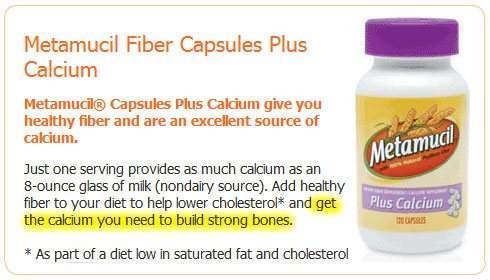
— What is the grossest irony here (besides other blatant deceptions already deciphered above)?
The soluble fiber in Metamucil blocks the absorption of fats and fat-soluble minerals, required for assimilation of fat-soluble vitamin D and essential minerals, including calcium. So if you take this 'snake oil' to protect your bones, not only will you not get much calcium from it, you'll also be suffering a precipitous loss of calcium from your bones by interfering with vitamin D absorption. Oh, well...
As you can see, it isn't me who has gone postal over fiber. I am just a messenger—and a darn lucky one, because my diet is mercifully fiber-free, and fiber no longer wrecks my health.
Change will not come any time soon unless you e-mail a link to this site to your relatives, friends, colleagues, bosses, elected representatives; your favorite radio station, television channel, newspaper, and internet columnists; your children's teachers and school administrators, and, of course, to your doctors. If you want to effect change, help them to learn the true facts!
For a greater impact, consider gifting Fiber Menace to people you love and to people of considerable influence. Amazon will gladly send your gift to any person you choose. When people see those brass screws inside the cereal bowl, they act, because nothing motivates people as much as fear does for their own health and future. And that's how you bring about effective change!
Konstantin Monastyrsky